
Reviewed · CIDADE VELHA & PRAIA TOURS
Praia: Plateau and Cidade Velha Guided Tour
Two cities, one compact history lesson. This four-hour tour links Praia’s Plateau with Cidade Velha, the first city built by Europeans in sub-Saharan Africa. I like the mix of everyday life and major historic sites, especially the Municipal Market and the old slave market of Pelourinho. I also like that you finish with a sea-view lunch at a local restaurant, though lunch and the Royal Fortress entrance fee cost extra.
The small group, limited to 10 people, keeps the walking tour personal. Guides speak English, French, Portuguese, and Spanish, and guides David and Edney have earned especially warm praise for their patience, stories, and ability to connect visitors with local people. The main drawback is physical: this is not suitable for wheelchair users or people with mobility impairments, and Cape Verde’s sun makes water, a hat, and sturdy shoes essential.
In This Review
- Key points to know before booking
- Why this tour gives you a useful first look at Santiago
- Starting in Praia’s Plateau
- The Municipal Market and Sucupira Market
- The road to Cidade Velha
- Royal Fortress of São Filipe
- Cathedral ruins and the old religious quarter
- Pelourinho, Banana Street, and the fishing shore
- A sea-view lunch with local food
- What guides David and Edney add
- Is $70 a fair price?
- Practical advice for a comfortable visit
- Should you book this Praia and Cidade Velha tour?
- FAQ
- How long does the Praia and Cidade Velha tour last?
- What is included in the tour price?
- Is lunch included?
- How much does entry to the Royal Fortress cost?
- Is the Municipal Market open every day?
- What languages are available for the guide?
- How large is the tour group?
- Is hotel pickup provided?
- What should I bring?
Key points to know before booking
- Two destinations in four hours: You see the Plateau in Praia and the main sights of Cidade Velha without giving up a full day.
- A strong history focus: The tour covers slavery, pirate attacks, colonial power, religion, and the roots of Cape Verdean culture.
- Markets are part of the experience: The Municipal Market offers fruit and vegetables, while Sucupira is Praia’s largest flea market.
- David and Edney receive high praise: Their guiding style is described as patient, flexible, welcoming, and full of useful local stories.
- Lunch is not included: Plan for the cost of a typical restaurant meal, plus 5 euros per person for entry to the Royal Fortress of São Filipe.
- Sunday planning matters: The Municipal Market is closed on Sundays, so that part of the visit will not be available then.
Why this tour gives you a useful first look at Santiago
Praia and Cidade Velha tell different parts of the same story. Praia is the modern capital, where government buildings, markets, shops, and daily life fill the streets. Cidade Velha is the older center, where stone ruins and churches point to the early colonial period and the painful history of slavery.
I like the way this tour places both settings in one morning or afternoon. You are not left with a postcard version of Cape Verde made up only of beaches and scenic views. Instead, you get a look at political life in Praia, local commerce, religious buildings, military defenses, fishing, and food.
The four-hour length also makes sense for a short stay, a cruise stop, or a first day on Santiago Island. You get an organized introduction without committing to a full-day excursion. The tradeoff is that the schedule moves at a steady pace. If you prefer long museum visits or slow photography stops, you may want more time in Cidade Velha on your own.
More Cidade Velha and Praia trips:
- From Port of Praia: Island Tour for Cruise Ship passengers
★ 4.5 · 190 reviews - Praia & Cidade Velha: Guided City Tour
★ 4.8 · 80 reviews - Praia: Baobab Mysterious Tree, Green Valley & Old City Hike
★ 4.8 · 53 reviews
Starting in Praia’s Plateau
Pickup is included from your hotel in Praia. You can wait at reception or in front of the hotel, and the provider usually arrives about 10 minutes before the arranged time. From there, the tour begins in the historic Plateau district.
The Plateau is the center of Praia’s formal and civic life. You pass the Jaime Mota Military Barracks, the Presidential Palace, and Alexandre Albuquerque Square. These sites help you read the city before the tour moves into the markets and older settlements.
The walking here is more than a quick photo stop. A good guide can explain how the buildings fit into Cape Verde’s political story and point out details that are easy to miss when you wander alone. Edney, who guided one French-language tour, was praised for answering questions, sharing anecdotes, and adjusting to the group. David received similar praise for explaining Cape Verdean culture, history, and local life in a clear and engaging way.
You should expect a mix of walking and vehicle transfers. The activity includes a guided visit around Praia and a bus transfer to Cidade Velha. Bring comfortable shoes, since the tour is not designed for passengers who need step-free access.
The Municipal Market and Sucupira Market
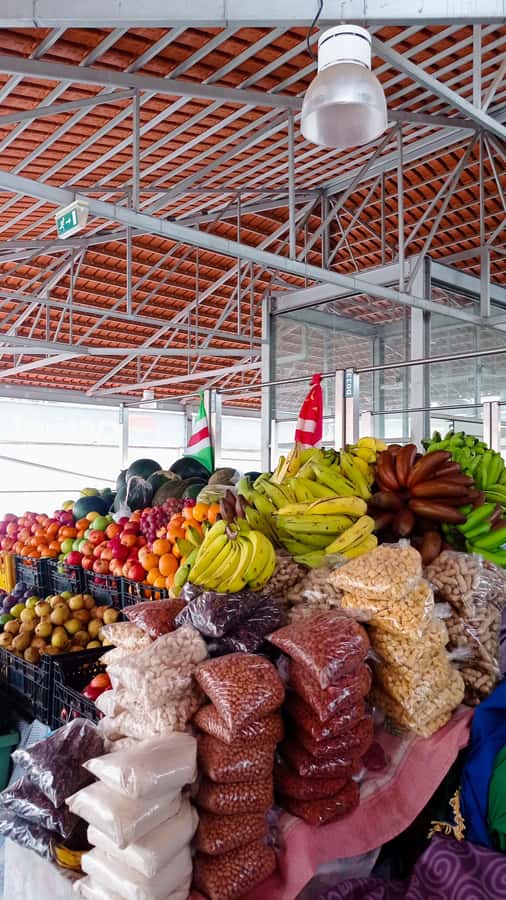
The Municipal Market is one of the most useful stops because it puts you close to ordinary commerce. You can see local fruits and vegetables and meet people going about their daily errands. This is the kind of place where a guide matters. A guide can help you understand what you are seeing and make conversation less awkward.
The market is closed on Sundays. That is an important scheduling detail, not a footnote. If market life is a major reason for booking, choose another day.
The next market, Sucupira, offers a different view. It is described as Praia’s largest flea market, so expect a less formal setting with goods, bargaining, and local trade. The two stops work well together: the Municipal Market is focused on food and daily shopping, while Sucupira gives you a look at the city’s wider street economy.
I like this part of the tour because it keeps the experience grounded. Historic monuments can explain the past, but markets show you how a city functions now. You should still keep personal belongings secure and follow your guide’s advice in crowded areas. The tour does not promise a shopping stop built around souvenirs, so think of Sucupira as a cultural visit first.
The road to Cidade Velha
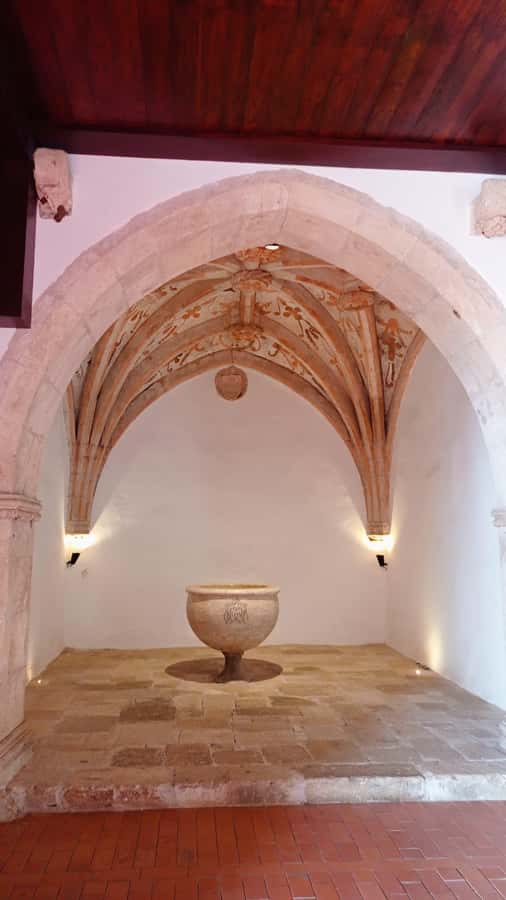
The move from Praia to Cidade Velha shifts the mood. Praia is the capital and the center of present-day public life. Cidade Velha is tied to the beginnings of Cape Verde as a nation and culture.
The town is a UNESCO World Heritage Site and is often described as the cradle of Cape Verdean culture. Its importance comes with a difficult past. The city was connected to the Atlantic slave trade, and the tour directly addresses that history rather than smoothing it over.
That context makes the visit more meaningful. You are not simply walking among old stones. You are seeing a place shaped by European expansion, African communities, forced movement, religion, trade, and military conflict. The guide’s role is especially important here because ruins can look plain without explanation.
The tour allows time for guided sightseeing, photographs, a walk, and some free time. Four hours is enough to see the key points, but not enough to examine every ruin at length. I would keep your camera ready, but listen first. The best value here comes from connecting the sites to the story of the town.
A few more Praia trips worth weighing up
- Santiago: Landscapes, Street Art, and Markets Day Trip
★ 4.8 · 316 reviews - Serra Malagueta: Principal Valley Hike & Lunch with Locals
★ 4.7 · 64 reviews - Santiago: Calabaceira Valley Trek & Visit to Cidade Velha
★ 4.8 · 49 reviews - From Praia: Boat Trip, Snorkeling, Cave & BBQ on the Beach
★ 4.6 · 45 reviews
Royal Fortress of São Filipe
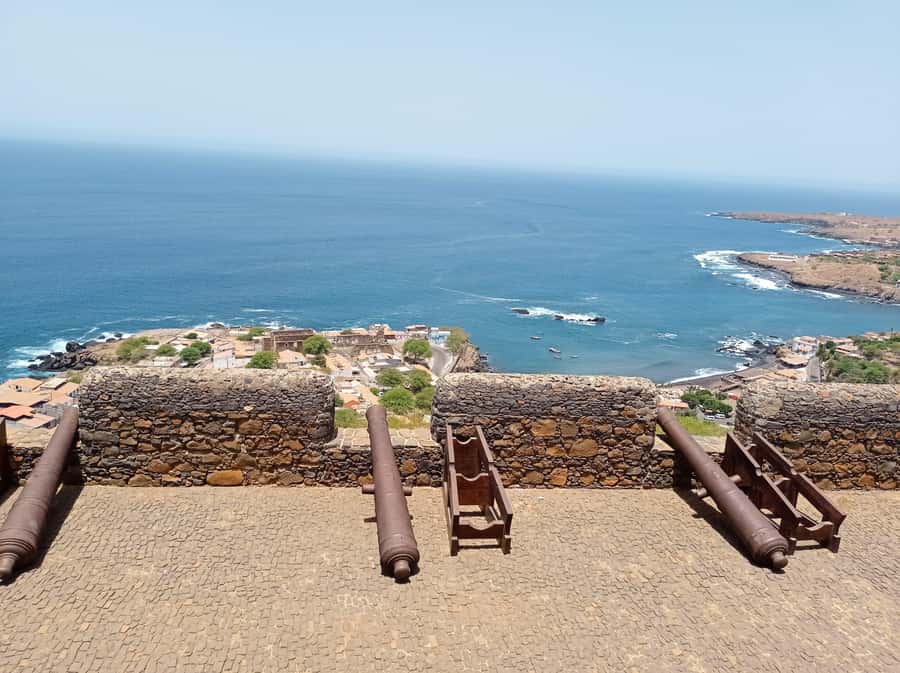
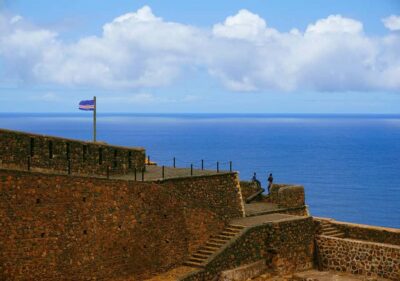
The first major stop in Cidade Velha is the Royal Fortress of São Filipe. It was built to defend the city from pirate attacks and sits 121 meters above sea level.
The height gives you scenic views over the town and coast. It also explains the fortress’s purpose. From above, you can better understand why defense mattered and how the settlement related to the sea.
Entry is not included. The fee is 5 euros per person, so add that to the advertised $70 tour price. The extra charge is small, but knowing about it helps you budget accurately.
I consider this one of the tour’s strongest stops because it combines scenery with military history. You are not looking at a fort in isolation. You are seeing a defensive position built for a city exposed to attacks from the water.
The climb and uneven historic surfaces may be tiring for some people. Since the experience is not suitable for people with mobility impairments, ask yourself honestly how comfortable you are with walking and historic-site footing before booking.
Cathedral ruins and the old religious quarter
Cidade Velha contains the ruins of the first cathedral in sub-Saharan Africa. The remains are a reminder of the city’s role as a major early European settlement in the region.
The cathedral stop works best when you let the guide supply the context. The stones alone cannot explain the religious and political importance of the building, or how Christianity was used within the colonial system. The tour presents the site alongside the broader story of the city and its changing communities.
You also visit the Church of Nossa Senhora do Rosário and the Convent of São Francisco. These buildings add a religious thread to the tour, but they should not be viewed only as pretty architecture. Together, they show how faith, administration, and colonial power were tied together in Cidade Velha.
The sites are close enough to fit into a four-hour visit, but the pace may feel brisk if you want to photograph every doorway and stone detail. I suggest choosing one or two favorite views rather than trying to document everything.
Pelourinho, Banana Street, and the fishing shore
The old slave market of Pelourinho is among the most important and sobering stops. It brings the history of slavery into a specific place rather than leaving it as a distant topic in a textbook.
The visit is valuable, but it may also be emotionally difficult. A responsible guide should give the site proper weight, and the praised guides on this experience are noted for their historical explanations and willingness to answer questions.
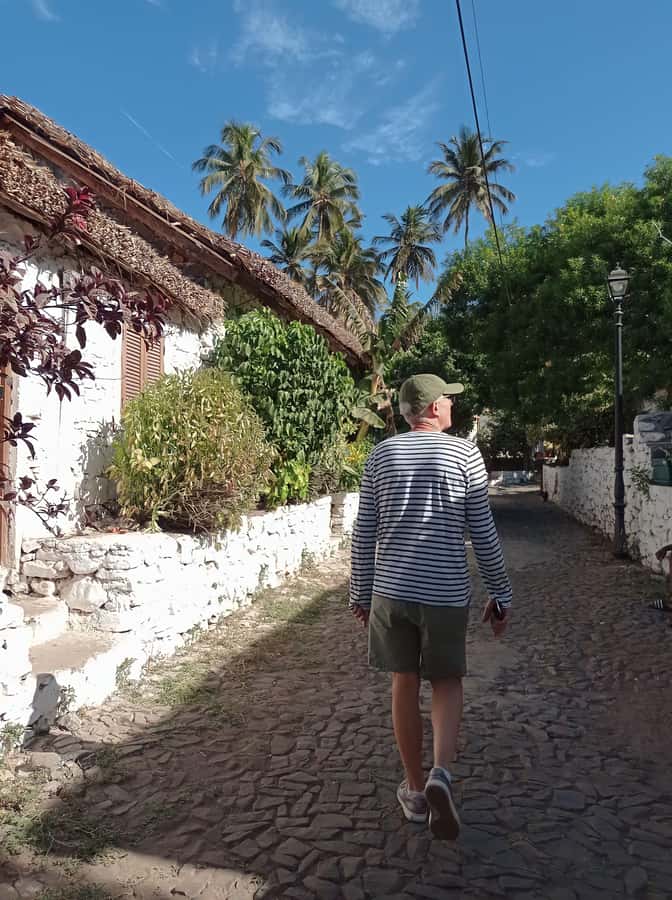
Banana Street offers a different mood. Its traditional houses show the older character of the town, and the walk helps you see how the settlement was built and lived in. It is a good place for photographs, though you should avoid rushing through it as if it were only a picture stop.
Near the water, you may see fishermen returning in traditional boats with fresh fish. This is one of the tour’s most appealing links between past and present. Cidade Velha is not only a historic site preserved for visitors. It is also a living coastal town with people working at sea.
The tour then continues to the Convent of São Francisco and the Church of Nossa Senhora do Rosário. Taken together, these stops give you a broad view of Cidade Velha: military defense, forced labor, religion, traditional homes, fishing, and local life.
A sea-view lunch with local food
The tour ends its sightseeing with lunch at a typical local restaurant overlooking the sea. Lunch is not included, so bring money for the meal and any personal expenses.
I like this arrangement because food gives you time to pause after the historical stops. You can enjoy local gastronomy in a peaceful setting rather than eating quickly between monuments. The sea view also gives the final part of the tour a relaxed feel.
Still, the exact menu, price, and dishes are not specified. If you have dietary needs, ask the provider before booking. The tour promises a typical local restaurant, not a fixed meal or a special dietary program.
Since lunch takes place during a four-hour experience, keep your expectations sensible. This is a chance to taste Cape Verdean food and enjoy the setting, not a full culinary tour.
What guides David and Edney add
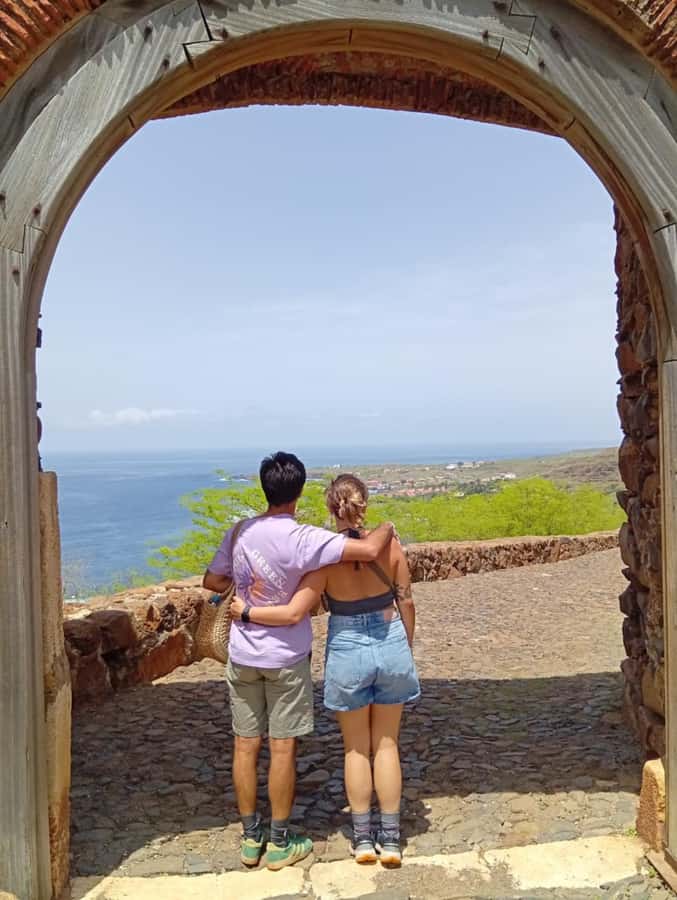
The guiding service is available in English, French, Portuguese, and Spanish. That range is useful on a small-group outing, especially when the subject matter includes difficult history and local customs.
David was praised for bringing Cape Verdean culture, the country, and its people closer through clear historical storytelling. Another account describes him as patient and attentive, with an ability to discuss the island’s plants and animals as well as its history.
Edney was praised for speaking excellent French, adapting to the group, helping visitors meet local people, and answering questions with plenty of anecdotes. These details matter because the tour depends on explanation. Without a good guide, the ruins, markets, and churches could feel like disconnected stops.
Guide assignments can change, so you should not book on the assumption that one particular person is guaranteed. Still, the praise for both David and Edney points to a provider that places real value on personal guiding.
Is $70 a fair price?
The tour costs $70 per person. For four hours, that is not the cheapest way to see Praia and Cidade Velha, especially since lunch and the 5 euro fortress entry are separate.
The price becomes easier to justify if you value hotel pickup and drop-off, a bilingual or multilingual guide, a small group capped at 10, and a carefully arranged route between two places. You are paying for interpretation and transport, not simply admission to a few historic sites.
It may be good value for a first visit, particularly if you have limited time in Praia or do not want to arrange transport yourself. It is less attractive if you already have a car, speak Portuguese or another local language comfortably, and prefer to explore at your own pace.
The tour also offers free cancellation up to 24 hours before the start and a reserve-now, pay-later option. Those terms help if your Santiago plans are still changing.
Practical advice for a comfortable visit
Wear shoes that can handle several walking stops. Add sunscreen, a sun hat, and enough water, since sun protection and hydration are specifically advised.
Bring a camera for the fortress views, traditional streets, markets, and coast. Smoking is not allowed during the activity.
The tour is not suitable for wheelchair users or people with mobility impairments. If uneven ground, stairs, or extended walking are difficult for you, ask the provider for a detailed accessibility discussion before paying.
A small group is a real benefit here. With no more than 10 people, it should be easier to hear the guide, ask questions, and keep the market visits from feeling like a large convoy. The exact pace will still depend on the group.
Should you book this Praia and Cidade Velha tour?
I would book it if you want a compact, history-focused introduction to Santiago Island and value having transport and a guide arranged for you. The strongest reasons are the thoughtful route, the contrast between Praia and Cidade Velha, the market visits, and the chance to connect colonial history with daily life today.
I would skip it if your priority is a slow beach day, a long meal, or independent exploration. The schedule is active, lunch costs extra, the fortress requires another 5 euros, and the historic sites are not designed for visitors with mobility limitations.
For most first-time visitors with four spare hours, this is a useful and worthwhile choice. Bring water, wear practical shoes, and choose a day other than Sunday if the Municipal Market matters to you.
FAQ
How long does the Praia and Cidade Velha tour last?
The tour lasts four hours, including visits to Praia and Cidade Velha and return drop-off in Praia.
What is included in the tour price?
Hotel pickup and drop-off, the guided visits to Praia and Cidade Velha, visits to the Municipal Market and Sucupira Market, and a guide service are included.
Is lunch included?
No. Lunch is not included, so you pay separately for the meal at the typical local restaurant.
How much does entry to the Royal Fortress cost?
Entry to the Royal Fortress of São Filipe costs 5 euros per person and is not included in the tour price.
Is the Municipal Market open every day?
No. The Municipal Market is closed on Sundays.
What languages are available for the guide?
Guiding is available in English, French, Portuguese, and Spanish.
How large is the tour group?
The experience is limited to 10 participants, making it a small-group tour.
Is hotel pickup provided?
Yes. Pickup and drop-off in Praia are included. You can wait at your hotel reception or in front of the hotel, and the provider usually arrives about 10 minutes early.
What should I bring?
Bring comfortable walking shoes, a sun hat, sunscreen, water, and a camera. Smoking is not allowed during the activity.
Just added around Praia
- Santiago Island: Private Airport Transfer to Praia or Vice Versa★ 5.0 · 3 reviews
- Cape Verde: Best Hikking Trails of Santiago Island – 6 Days★ 5.0 · 3 reviews
- Praia City Tours★ 3.4 · 3 reviews
- Hiking Águas Belas Cave★ 4.5 · 3 reviews
- Best of Santiago Island: Cidade Velha, Workshop & Tarrafal Beach Tour★ 4.5 · 3 reviews
- From Praia: Full-Day Guided Fogo Island Tour★ 4.2 · 3 reviews
- Tarrafal Bay Boat Trip and Beach Day★ 4.4 · 3 reviews
- Cape Verde: Wonders of Santiago Island – 7 Days 6 Nights★ 5.0 · 4 reviews
Cidade Velha & Praia Tours, compared.
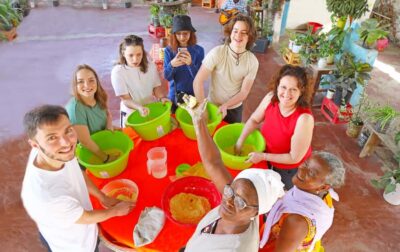
Santiago Island Tour with Tastings and Tarrafal Beach
Read our review →
From Port of Praia: Island Tour for Cruise Ship passengers
Read our review →
Santiago Island Tour: Meet with a Local Family & Tarrafal Beach
Read our review →

Baobab Mysterious Tree, Green Valley & Old City Hike
Read our review →Browse the lists this tour appears in