
Reviewed · SANTO ANTãO HIKING
Ribeira Grande: Hiking Day Trip to Ribeira de Torre
Mountain paths lead to local life.
This six-hour trip from Ribeira Grande takes you into Santo Antão’s dramatic Ribeira de Torre valley, where steep slopes, farm terraces, small villages, sugar cane, fruit trees, and mountain water all fit into one long half-day. I like the authentic village contact, especially the chance to pass through places such as Chu Chu and speak with local people. I also like the mix of walking, scenery, swimming, and a visit to a grogue distillery, rather than spending the whole day on a single trail.
The main drawback is the hike itself. You walk for about four hours on mountain paths, with some exposed slopes and significant changes in elevation. This is not a gentle stroll, and fear of heights or limited mobility can make the route a poor match. Children under 12 are not permitted.
The tour costs $100 per person, including pickup, a guide, the hike, and liability insurance. That is a fair price if you want transport, route finding, interpretation, and a local rum stop bundled together. Food and drinks are extra, and you need to bring your own water.
In This Review
- Key points at a glance
- Why Ribeira de Torre is worth your walking shoes
- The high start at Faja da Cima
- Rabo Curto and the first mountain views
- Crossing toward Lombo de Pedra and Ribeira de Torre
- Chu Chu, sweeping views, and a waterfall
- The return route through bananas and coffee
- What the $100 price includes
- Who should book this hike?
- Practical tips for a better day
- Should you book the Ribeira de Torre hike?
- FAQ
- How long does the Ribeira de Torre hiking tour last?
- Where does the tour start?
- What villages does the route visit?
- Is swimming included?
- Is food included in the price?
- Which languages can the guide speak?
- Is the hike suitable for children?
- When can I see grogue production?
Key points at a glance
- Start high at Faja da Cima: The drive from Ribeira Grande takes you to a trailhead at about 1,480 meters, giving you a high mountain beginning rather than a long climb from town.
- Walk through working countryside: The route passes cultivated terraces, sugar cane, fruit trees, banana plants, coffee, and small homes near villages such as Rabo Curto, Lombo de Pedra, and Chu Chu.
- Waterfall and natural pool: You pass close to a mountain waterfall and may have time for a refreshing swim in a natural pool with local people.
- A guide adds local context: João received especially warm praise for his conversation with local people, while another detailed rating highlighted information about Cape Verdean wildlife, plants, and the country.
- Grogue is part of the finish: The final stop is a local rum distillery, with production season running from January 1 through May 31.
- Best for active adults: The tour suits hikers comfortable with mountain paths, uneven ground, and heights. It is not suitable for wheelchair users or people with mobility impairments.
Why Ribeira de Torre is worth your walking shoes
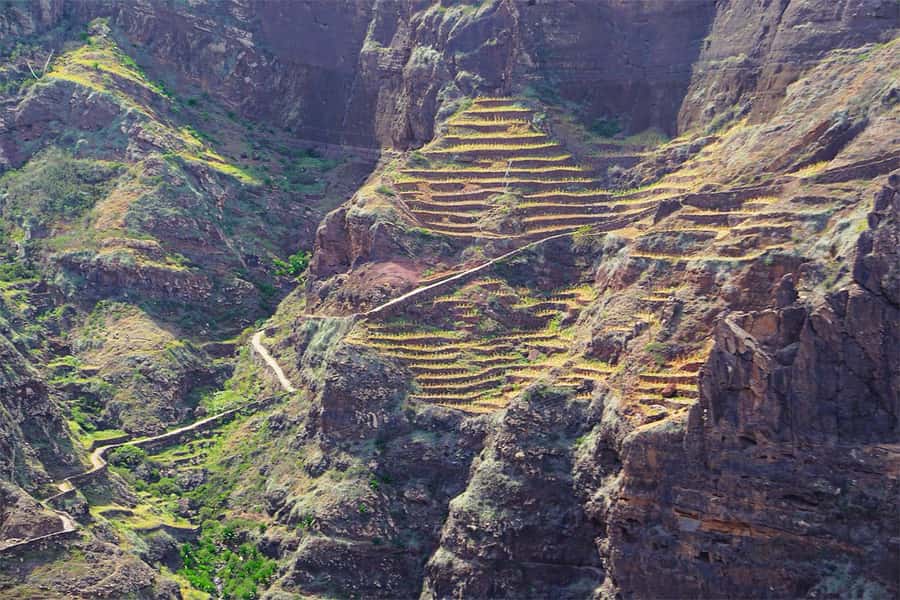
Santo Antão is best understood on foot. From a vehicle, you can admire the sharp mountains and deep valleys, but hiking lets you see how people use every available patch of ground. Terraces cling to slopes, small houses sit along routes between villages, and crops appear in places that first look too steep or rocky for farming.
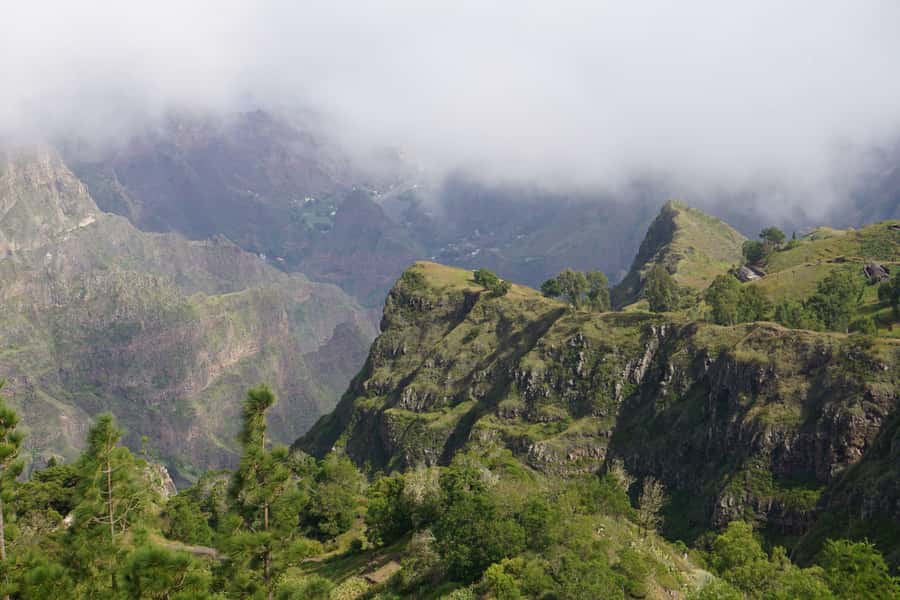
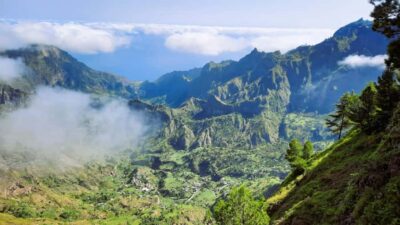
The Ribeira de Torre valley gives you a concentrated look at this rural way of life. The views include layered agricultural terraces, unusual rock formations, mountain ridges, and the broad Ribeira Grande valley below. You get plenty of photo opportunities, but the scenery is not only for the camera. It helps explain why Santo Antão feels so different from a standard beach destination in Cape Verde.
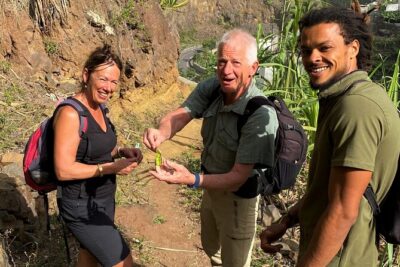
I especially like that the route links scenery with daily life. You are not simply driven to a viewpoint, handed a few facts, and returned to town. You walk past cultivated land and villages, see crops growing, and have chances to speak with people along the way. The guide’s role matters here. One verified rating singled out João for being an excellent guide and for making conversation with local people part of the day.
More Hiking Tours in Santo Antao
- Santo Antão: Hiking Cova Volcano Crater to Ribeira Paúl
★ 4.5 · 31 reviews - Santo Antão: Ponta do Sol & Fontainhas Guided Trip with Hike
★ 4.8 · 9 reviews - Santo Antão: Trekking Cova de Paúl Volcano Crater – Ribeira de Paúl
★ 5.0 · 8 reviews
The high start at Faja da Cima
Pickup is included from your accommodation in Ribeira Grande. You should wait in the hotel lobby 10 minutes before the scheduled time, then settle in for the drive to Faja da Cima, the trailhead at roughly 1,480 meters.
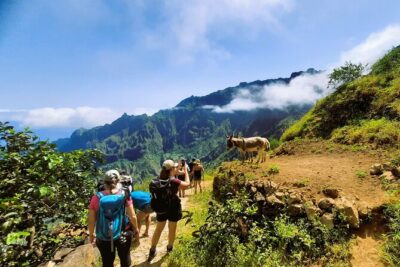
Starting high changes the character of the hike. Instead of beginning with a long uphill slog from the valley, you set off among mountain slopes and rural paths. The route then works through the high countryside toward Rabo Curto and onward to the Ribeira de Torre valley.
You should still expect effort. A high starting point does not make the walk easy, since the route crosses hills and includes uneven mountain terrain. Comfortable clothing, sturdy hiking shoes, sunscreen, a hat, and plenty of water are sensible basics. Food and drinks are not included, so plan ahead rather than counting on a shop along the route.
The altitude also means conditions can feel different from Ribeira Grande. The supplied information does not promise a particular temperature or weather pattern, so dress for an active day and be ready for changing conditions. Your guide can help you manage the pace, but you should be honest about your fitness before booking.
Rabo Curto and the first mountain views
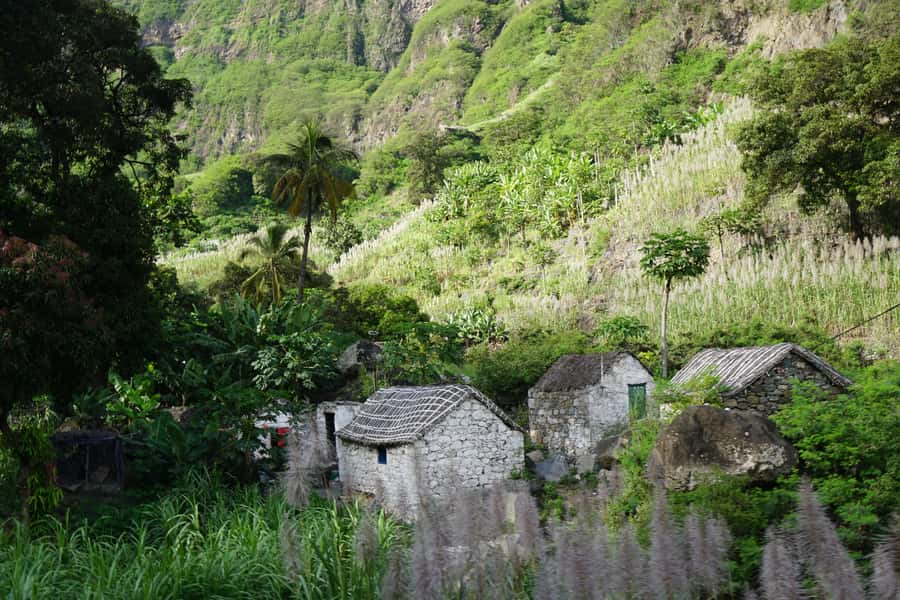
From Faja da Cima, the hike follows slopes toward Rabo Curto through natural plant growth and cultivated land. The first section is valuable because it shows the overlap between wild mountain vegetation and carefully worked farmland.
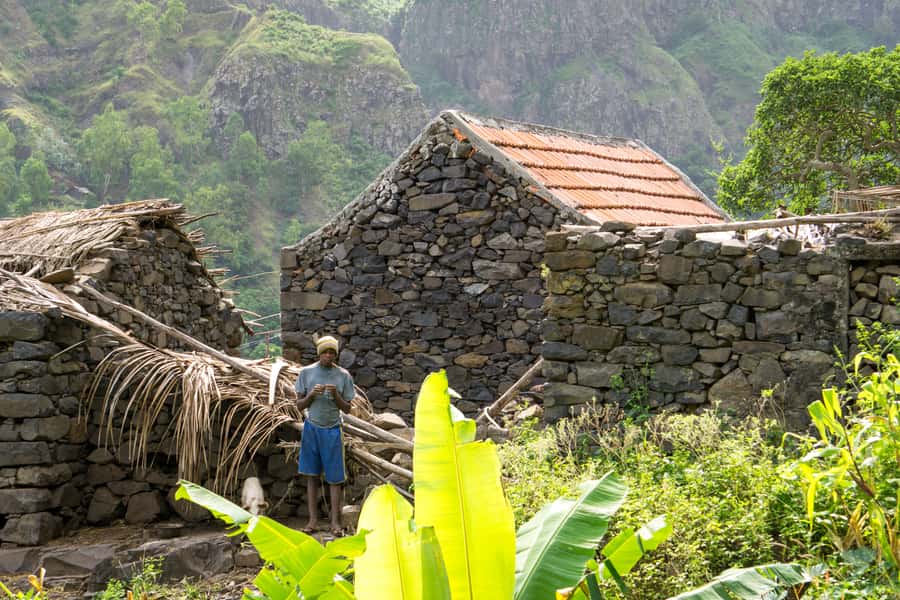
As you walk, look for the agricultural terraces. They are one of the defining sights of the route, with fields arranged in layers across steep ground. Small houses add scale to the view and remind you that this is a lived-in valley, not a protected park made only for sightseeing.
The path leads toward Lombo de Pedra, another rural village on the route. The supplied itinerary does not give a long list of monuments or formal attractions here, and that is part of the appeal. The interest comes from seeing ordinary village life set against dramatic hills.
I would keep your camera ready, but do not spend the whole section looking at a screen. The most useful pictures are often the wider ones that show houses, terraces, slopes, and the route’s relationship to the valley. Ask your guide about the crops and homes as you go. A rating from a French-speaking participant specifically praised the amount of information about Cape Verde, local plants, and wildlife, and encouraged asking questions.
Crossing toward Lombo de Pedra and Ribeira de Torre
The route continues across hills toward the Ribeira de Torre valley. This is where the day’s scenery becomes broader, with views across valleys, ridges, and distinctive rock formations.
The walk is not designed as a quick point-to-point transfer. You are moving through a series of rural settings, and each change in slope opens a different view. The cultivated terraces may look orderly from a distance, while the path itself gives you a closer look at the work involved in growing food on steep land.
You will see sugar cane and fruit trees along the way. These crops are not decorative additions. They connect directly with the grogue-making tradition you encounter later. The guide can help explain how local agriculture supports the area’s food and drink, making the distillery visit feel like a continuation of the walk rather than a separate tourist stop.
This section also requires attention underfoot. The exact trail surface is not specified, so you should assume uneven terrain and wear hiking shoes with good support. People with mobility impairments should not book this trip, and anyone uncomfortable with exposed mountain routes should think carefully before committing.
More Santo Antao ridge walks:
- From São Vicente: Santo Antão Day Trip with Local Guide
★ 4.7 · 101 reviews - Santo Antão Highlights: Day Trip by Car with Ferry from SV
★ 4.8 · 84 reviews - Santo Antão: Day Trip by Car or Trek
★ 5.0 · 72 reviews - Santo Antão: Full Day Island Tour & Visit to Cova de Paúl
★ 4.8 · 54 reviews
Chu Chu, sweeping views, and a waterfall
The hike reaches Chu Chu, also known as Xoxo, where you can look across the Ribeira Grande valley. This is one of the strongest viewpoints on the route because it brings together the features you have been walking through: deep valleys, farm terraces, scattered houses, and steep mountain walls.
The views are a major reason to choose this trip over a simple road excursion. You earn the outlook through a four-hour nature hike, and the changing perspectives help you understand the shape of the valley. The route offers plenty for photographers, especially if you enjoy pictures of layered fields and isolated homes rather than only postcard-style peaks.
Near Chu Chu, you pass close to a waterfall. Water is especially important in a dry island setting, and the waterfall gives the route a welcome change from rocky slopes and farmland. The experience is seasonal in feel, though the provided details do not state how much water flows at different times of year.
You may also swim in a natural pool. This is an optional refreshment, not a guaranteed requirement, so bring a swimsuit if you want to take advantage of it. The pool is described as a place where local people swim, which gives the stop a more natural character than a built swimming facility. Still, you should follow the guide’s advice about conditions and only enter if you feel comfortable.
The return route through bananas and coffee
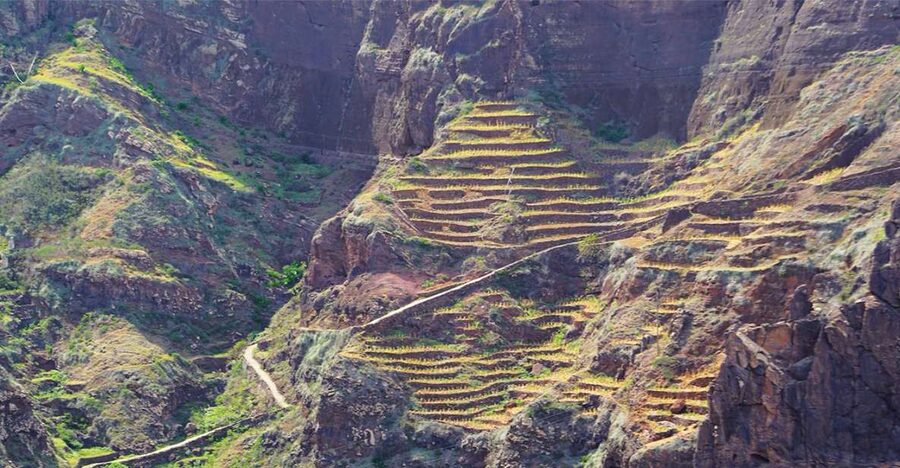
After the waterfall and pool, the route descends. The return section brings a different view of the valley, including banana and coffee plantations.
This change is worth noting when judging the tour’s value. You are not simply retracing the same path, so the walk continues to reveal new crops and terraces as you lose elevation. Bananas and coffee also show how varied local cultivation can be within a relatively compact area.
The descent may be easier in terms of breathing, but downhill walking can still be demanding on knees and ankles. If you are used to city walking but not mountain trails, do not underestimate the final hours. The tour lasts six hours in total, with about four hours dedicated to hiking, so you need enough stamina to remain comfortable late in the day.
The route ends with a visit to a local grogue distillery. Grogue is Cape Verdean rum, and the stop connects the drink to the sugar cane you saw earlier. Production season runs from January 1 through May 31. If seeing the production process is important to you, schedule the tour during that period. Outside those dates, the distillery visit may not offer the same seasonal activity, and the provided information does not promise what will be operating.
What the $100 price includes
At $100 per person, this is not the cheapest way to spend six hours in Santo Antão. The price makes more sense when you consider what is bundled into it.
You receive hotel pickup and drop-off in Ribeira Grande, transport to the high trailhead, a live guide, the four-hour hike, and liability insurance. You also receive help with navigation and interpretation in one of four languages: English, French, Spanish, or Portuguese. Private and small-group options are available, which can make a difference if you prefer a quieter pace or have a particular interest in plants, farming, or local customs.
The strongest value comes from combining several activities in one day. A waterfall, a natural pool, mountain villages, agricultural terraces, crop information, and a grogue distillery would be difficult to arrange as easily on your own, especially if you do not know the trail.
The price does not include food or drinks. Bring water and anything you need for the hike. Since there is no meal listed, do not treat the tour as a food excursion. Its value lies in the route, guide, transport, and local connections.
Free cancellation up to 24 hours before departure and the option to reserve now and pay later also reduce the risk when your schedule is still taking shape. Check the available starting time when booking, since the tour runs for six hours and the exact departure time is not fixed in the supplied details.
Who should book this hike?
I would choose this tour if you want an active introduction to rural Santo Antão and prefer local settings to a tightly packed sightseeing schedule. It suits adults and older teenagers who can handle several hours on mountain paths and who enjoy asking questions along the way.
It is also a good fit if you want a guide but prefer a private or small-group format. The language choice is generous, and the feedback gives useful evidence that guides can add more than directions. João was praised for encouraging contact with local people, while another high rating highlighted explanations about the country, local flora, and wildlife.
I would not choose it if you want a relaxed scenic drive, a short walk, or a guaranteed swim. The pool is an option, the rum production is seasonal, and the hike is the core of the experience. People afraid of heights, wheelchair users, those with mobility impairments, and children under 12 should look for another activity.
The overall rating is 4.9 from four ratings, including three top scores and one four-star score. That is encouraging, though the sample is small. The comments point most clearly to the guide’s personal contact, the scenery, and the information provided during the walk.
Practical tips for a better day
- Wear real hiking shoes: The route crosses mountain slopes and is not described as accessible terrain.
- Bring water: Drinks are not included, and a four-hour hike calls for your own supply.
- Pack sun protection: A hat and sunscreen are specifically recommended.
- Bring a swimsuit: You may have the chance to swim in the natural pool.
- Ask questions: The guide can discuss Cape Verde, local crops, plants, and wildlife. The strongest feedback specifically encouraged questions.
- Check the season: Grogue production runs from January 1 through May 31.
- Arrive early for pickup: Wait in your hotel lobby 10 minutes before the scheduled time.
- Think about heights: The tour is not suitable if exposed mountain paths make you uneasy.
Should you book the Ribeira de Torre hike?
Book it if you want to see Santo Antão through its villages, farms, water, and working countryside rather than from a vehicle window. The combination of a high mountain start, Chu Chu viewpoints, a waterfall, a natural pool, banana and coffee plantations, and a grogue distillery gives the day a satisfying range.
The $100 price is reasonable for the transport, guide, insurance, and route planning, especially in a private or small group. Just remember that the experience depends on your willingness to hike for about four hours. Bring water, wear proper shoes, and expect heights and uneven ground.
If that sounds like a good day out, this is one of the better ways to connect Ribeira Grande with the rural heart of Santo Antão.
FAQ
How long does the Ribeira de Torre hiking tour last?
The full activity lasts six hours, including pickup, transportation, the hike, and the return to your accommodation. The nature hike itself lasts about four hours.
Where does the tour start?
Pickup is provided from your accommodation in Ribeira Grande. You then travel to Faja da Cima, where the hike begins at an altitude of about 1,480 meters.
What villages does the route visit?
The route includes rural areas near Rabo Curto and Lombo de Pedra, and it reaches Chu Chu, also called Xoxo.
Is swimming included?
The route passes near a waterfall and offers the option to swim in a natural pool. Swimming is not required.
Is food included in the price?
No. Food and drinks are not included, so you should bring water and anything else you need during the hike.
Which languages can the guide speak?
Guiding is available in English, French, Spanish, and Portuguese.
Is the hike suitable for children?
The tour is not suitable for children under 12 years old.
When can I see grogue production?
The grogue production season runs from January 1 through May 31. The tour includes a visit to a local grogue distillery.
More 1-Day Tours
- Santiago: Landscapes, Street Art, and Markets Day Trip
★ 4.8 · 316 reviews - Sal island: Secrets of a Native Guide Day trip with Lunch
★ 4.8 · 139 reviews - Sal: Full-Day Trip Around the Island with Lunch
★ 4.3 · 117 reviews - Discover Santiago island in 1 day
★ 5.0 · 39 reviews
More Hiking Tours
- Fogo Island: Pico do Fogo Volcano Summit Hike
★ 4.6 · 92 reviews - Serra Malagueta: Principal Valley Hike & Lunch with Locals
★ 4.7 · 64 reviews - Santiago Island: Serra Malagueta & Tarrafal Beach Trek Tour
★ 4.8 · 61 reviews - Praia: Baobab Mysterious Tree, Green Valley & Old City Hike
★ 4.8 · 53 reviews
Just added around Cape Verde
- Santiago Island: Private Airport Transfer to Praia or Vice Versa★ 5.0 · 3 reviews
- Cape Verde: Best Hikking Trails of Santiago Island – 6 Days★ 5.0 · 3 reviews
- Cape Verde – Santiago, Fogo, São Vicente & Santo Antão Islands 11 Days★ 5.0 · 3 reviews
- Sal Island in a Group – A Full Day Exploring the Highlights★ 5.0 · 3 reviews
- Sal Island: Catamaran cruises on Sal Island★ 3.7 · 3 reviews
- Sal island: Guided Historical and Cultural Tour★ 4.4 · 3 reviews
- Praia City Tours★ 3.4 · 3 reviews
- Tarrafal to the Airport.★ 5.0 · 3 reviews
Santo Antão Hiking, compared.
Santo Antão Highlights: Day Trip by Car with Ferry from SV
Read our review →
Full-Day Island Tour in Santo Antão with Lunch Included
Read our review →
Trekking Cova de Paúl Volcano Crater – Ribeira de Paúl
Read our review →Browse the lists this tour appears in