Reviewed · WORKSHOPS
Kitesurf Lessons in Cape Verde
Feel the wind pull you forward. This two-hour lesson in Sal gives you a proper first taste of kitesurfing, starting with kite control on the beach and ending in the water with an instructor. I like the IKO-qualified instructors and the clear step-by-step progression from a small practice kite to a full-size kite. I also like that this is a private activity, so your group gets the lesson rather than sharing attention with a large class.
The main point to consider is that this is an introduction, not a full course that promises independent riding in one session. You must be able to swim and have moderate physical fitness, and the lesson depends on suitable weather. At $141.14 per person, the price makes the most sense if you want real instruction and a controlled first session, not simply a quick beach demonstration.
In This Review
- Key points before you book
- Why this is a good first step into kitesurfing
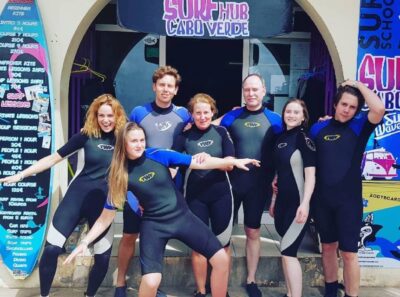
- Meeting at Surf Hub Cabo Verde in Santa Maria
- Learning with the small training kite
- Handling the larger kite and its safety systems
- Entering the water for body dragging
- What makes Kitebeach worth the trip
- The teaching style and school support
- Is $141.14 good value for two hours?
- Who should book this Sal kitesurf lesson?
- Timing, weather, and practical planning
- Should you book it?
- FAQ
- Where does the kitesurf lesson start?
- Where does the activity finish?
- How long does the lesson last?
- Do I need to know how to kitesurf before booking?
- Do I need to be able to swim?
- Is this a private activity?
- What happens if bad weather cancels the lesson?
Key points before you book
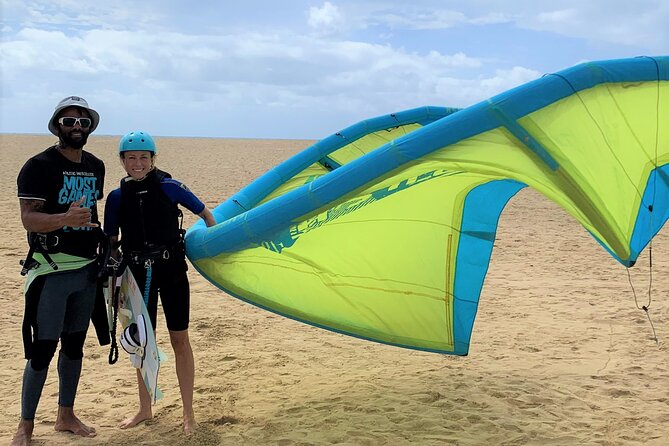
- Two hours from beach basics to body dragging: You learn kite control first, then move into the water under supervision.
- IKO-registered school: The instructors are IKO qualified, with safety systems included in the lesson.
- Kitebeach is the main setting: The beach provides room for the early practice work before the water session.
- Private group format: Only your own group participates, which can mean more direct attention.
- Swimming ability is required: This is an active water sport, not a passive sightseeing outing.
- Flexible school support: The Surf Hub Cabo Verde team has also helped arrange lifts to Kitebeach and other activities, though you should confirm exactly what is included with your booking.
Why this is a good first step into kitesurfing

Kitesurfing can look simple from the shore. A person holds a bar, the kite rises, and the wind does the rest. In practice, the kite responds quickly, and small mistakes can create large movements. A good first lesson must teach control and safety before asking you to stand on a board.
That is what I like about this session. It does not rush you straight into trying to ride. You begin with a small training kite on the beach, where the instructor can explain how the wind affects the kite and how the controls work. This gives you a safer place to learn the basic hand movements before handling larger equipment.
The progression is sensible:
- Meet at the Surf Hub Cabo Verde shop in Santa Maria.
- Prepare the equipment for your lesson.
- Walk or travel to Kitebeach, depending on the arrangements made with the school.
- Practice kite flying with a small training kite.
- Move to a larger kite and learn the safety systems.
- Enter the water with the instructor for body dragging.
Body dragging is an important early skill. You use the kite to pull yourself through the water without the board, learning how the kite generates movement and how to control your position. It may not look like the headline moment of kitesurfing, but it teaches the connection between wind, kite, and body before you add a board.
More hands-on workshops:
- Surf Lessons
★ 5.0 · 60 reviews - Sal: Surf Lesson
★ 4.7 · 48 reviews - Sal: Kizomba Group Class – Santa Maria, Cape Verde
★ 4.5 · 28 reviews
Meeting at Surf Hub Cabo Verde in Santa Maria
The lesson begins at Surf Hub Cabo Verde on Rua 15 de Agosto in Santa Maria. This shop meeting point matters because it gives the instructor a chance to prepare the correct equipment and get your group organized before heading to the beach.
You should arrive ready for an active session rather than treating the shop as a quick check-in desk. The equipment preparation is part of the experience. It is also the point where you can clarify the plan for reaching Kitebeach, especially if you need a lift.
The school operates Monday through Saturday from 9:00 a.m. to 4:30 p.m. The available hours listed for the current booking period are the same across the stated dates. Sunday availability is not provided, so do not assume that a Sunday lesson can be arranged.
The meeting point is in Santa Maria, which is useful if you are staying in or near town. The lesson ends back at the meeting point. The supplied details do not promise hotel pickup, so ask the school directly if you need transport to the shop or to Kitebeach.
Learning with the small training kite
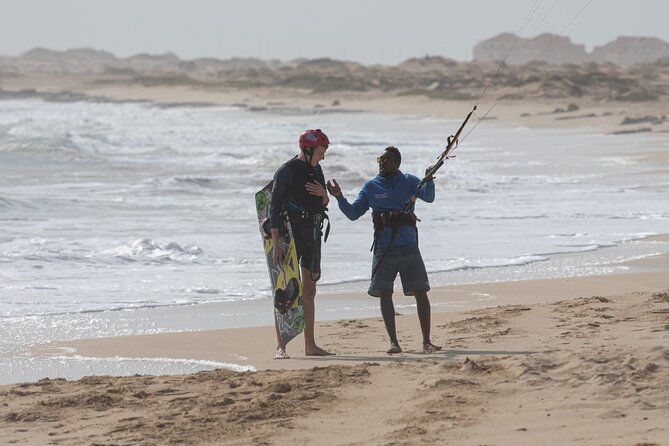
The first beach session uses a small training kite. This is the right tool for learning the basic feel of the sport because it is easier to manage than the larger kite used later.
Here you learn how to fly the kite and how your control inputs affect its movement. You will likely spend time getting used to the bar, the direction of pull, and the kite’s position in the wind. The goal is not speed. It is control.
This part may feel less dramatic than the water work, but it is where the lesson earns its value. If you cannot keep the training kite stable, you are not ready to handle the full-size equipment. A patient instructor can use this stage to correct your hand position and explain what to do before a problem develops.
The private format is especially helpful here. If only your group is taking part, the instructor can adapt the pace to your experience. A complete beginner may need more time with the basic kite movements, while someone with previous lessons may move through this stage faster.
You should still keep your expectations realistic. Two hours is enough for a first taste and a clear introduction to the sport. It is not enough time to master kite control, water technique, and board riding for most people.
Handling the larger kite and its safety systems
Once you have worked with the training kite, the lesson moves to a larger kite. This is where the sport begins to feel more powerful and more serious.
The instructor teaches the safety systems before you go into the water. That order matters. You need to know how to reduce the kite’s power and respond if the kite moves in an unexpected way. Kitesurfing is controlled fun, but the wind is stronger than your arms, so safety knowledge is not an optional extra.
The school’s IKO registration is a useful sign for someone choosing a first lesson. It means the instructors are trained through the International Kiteboarding Organization system, and the activity includes recognized instruction in kite handling and safety. It does not remove the need to listen carefully or follow the instructor’s directions, but it gives the lesson a more solid framework than an informal introduction from a casual beach operator.
The change from the small kite to the large kite is also a useful reality check. You may find that the larger kite responds with more force and needs calmer, more precise control. This is often the point where a beginner understands why the beach practice came first.
A few more Sal trips worth weighing up
- Sal: Island Experience Tour with a Certified Local Guide
★ 4.8 · 3,249 reviews - Sal: All-Inclusive Salt Lake, Blue Eye and Shark Bay Tour
★ 4.7 · 2,033 reviews - Experience on Sal Island with native and certified guide (including sharks)
★ 5.0 · 1,166 reviews - From Sal Island: Blu eye, Salt lake, Lemon Sharks & Palmeira
★ 4.6 · 1,003 reviews
Entering the water for body dragging
The water portion is the natural payoff of the lesson. With the instructor beside you, you take the kite into the water and practice body dragging.
You are not promised board riding in this two-hour experience. Instead, you learn to let the kite pull you through the water while you work on direction and control. This may be the first moment when the sport feels like genuine kitesurfing rather than a technical beach exercise.
The instructor’s presence is important here. In the water, the kite can pull you away from your original position, and you need to understand how to manage that movement. Body dragging helps teach water recovery and kite control without adding the difficulty of standing on a board.
You must be able to swim for this activity. That requirement should be taken seriously. Even with instruction and safety systems, you are handling equipment in moving water, and comfort in the water is part of being able to concentrate on the kite.
Moderate physical fitness is also required. The session involves carrying or handling equipment, standing and moving on the beach, controlling the kite, and working in the water. You do not need to be an athlete, but this is not a gentle sightseeing stop.
What makes Kitebeach worth the trip
Kitebeach is where the lesson’s different parts come together. You get the open beach area for kite practice and the water for body dragging, all within one outing.
The supplied details describe the location as stunning, but they do not provide a full description of the beach conditions or facilities. That means you should focus on the setting as a working kitesurf site rather than expect a resort-style beach day. The appeal is the wind, space, and access to the water.
The school has been praised for arranging lifts to Kitebeach. Still, this is an important detail to confirm before you arrive. The formal meeting point is the shop in Santa Maria, while the lesson itself takes place at Kitebeach. Ask if transport is part of your booking, an optional service, or something you need to arrange separately.
That small question can make the morning much easier. You do not want to arrive at the shop ready to fly a kite, then discover that you need to arrange your own trip to the beach.
The teaching style and school support
The strongest praise for Surf Hub Cabo Verde centers on friendly organization, patient instruction, safety, and the wider support offered by the team.
Amy is mentioned as a helpful organizer who assisted with a range of holiday arrangements, including accommodation, transfers, island trips, sailing, yoga, surf lessons, and kite lessons. That wider service may be useful if you are building a water-sports holiday around the lesson, but you should separate those add-ons from what is included in this two-hour experience.
Tchu is singled out for patient and reassuring instruction. The available feedback also describes instructors and assistants as professional, safety-minded, and good at making the lesson fun. One experienced participant reported progressing to upwind riding and transitions during broader instruction, but you should not treat that as the expected result of this introductory session.
The useful takeaway is simple: the school appears to work with beginners as well as more advanced kitesurfers. You can ask for advice about the right level instead of booking a lesson that is too easy or too difficult.
The lesson is also suitable for mixed ability within a broader holiday group, based on the school’s experience working with families that included complete beginners, someone with a few previous lessons, and a keen kitesurfer. For this particular booking, however, only your own group participates, so tell the school in advance if your group has different levels.
Is $141.14 good value for two hours?
At $141.14 per person, this is not a cheap beach activity. The value depends on what you want from the session.
You are paying for instruction, equipment preparation, a small training kite, a larger kite, safety instruction, and supervised water practice. You also get access to an IKO-registered school and a private group format. If you have always wanted to try kitesurfing but do not know where to start, those elements make the price easier to justify.
The cost is harder to defend if you expect to ride independently after one session. Kitesurfing has a learning curve, and this experience is designed as a first taste. You may finish knowing how the kite works and what your next lesson should cover, rather than gliding across the water on a board.
I would compare the price with the cost of hiring equipment without instruction. For a beginner, paying for qualified guidance and safety training is the smarter choice. A mistake with a kite can be expensive, uncomfortable, or dangerous. Instruction is where the real value lies.
The private format may also matter if you are traveling with family or friends. Your group gets a shared introduction instead of being placed with strangers, though the value depends on how many people are in your group and how the instructor divides the time.
Who should book this Sal kitesurf lesson?
I would recommend it to:
- A first-time kitesurfer who wants a structured introduction.
- An active visitor who is comfortable in the water.
- A couple, family, or small group that prefers a private activity.
- Someone curious about Cape Verde’s famous wind sport but not ready to commit to a full camp.
- A beginner who values safety instruction before trying to ride.
I would be more cautious if you have limited mobility, cannot swim, or dislike physically demanding water activities. The stated requirements are moderate fitness and swimming ability, and the lesson depends on good weather.
This may also suit a person who has tried kite flying before but needs a proper introduction to the larger kite and its safety systems. Tell the school about your experience so the instructor can set the pace appropriately.
Timing, weather, and practical planning
The listed operating hours are Monday through Saturday, 9:00 a.m. to 4:30 p.m. The activity lasts about two hours, but you should allow extra time around the lesson for meeting at the shop, preparing equipment, and getting to or from Kitebeach.
Good weather is required. If poor weather cancels the activity, you are offered a different date or a full refund. That policy is sensible for a wind-dependent sport, but it means you should avoid placing the lesson on the final few hours of your holiday if possible.
You can cancel for a full refund up to 24 hours before the start time. Cancellations or changes made less than 24 hours ahead are not accepted for a refund. The cut-off uses local time in Cape Verde.
Service animals are allowed. The activity is otherwise aimed at people who can manage the physical demands of kite handling and water practice.
Should you book it?
Book this lesson if you want a genuine introduction to kitesurfing in Sal, with qualified instruction, safety training, and time in the water. I especially like the logical progression from the small kite to the larger kite, followed by body dragging. It treats the sport as a skill to learn, not a stunt to watch.
Do not book it expecting a guaranteed board ride or instant independence. At $141.14, the lesson is best value for a beginner who wants a safe, private first step and may continue with more instruction later.
Before paying, confirm the transport plan between the Santa Maria shop and Kitebeach, tell the school your group’s experience levels, and choose a day with some flexibility in case the wind or weather changes. If those details suit you, Surf Hub Cabo Verde offers a well-structured way to find out if kitesurfing is your kind of Cape Verde adventure.
FAQ
Where does the kitesurf lesson start?
The activity starts at Surf Hub Cabo Verde, Rua 15 de Agosto, Santa Maria 4111, Cape Verde.
Where does the activity finish?
The experience ends back at the meeting point in Santa Maria.
How long does the lesson last?
The lesson lasts approximately two hours.
Do I need to know how to kitesurf before booking?
No. The experience is designed as a first taste of kitesurfing and begins with basic kite flying using a small training kite.
Do I need to be able to swim?
Yes. Participants must be able to swim.
Is this a private activity?
Yes. Only your group participates in the activity.
What happens if bad weather cancels the lesson?
You can choose another date or receive a full refund if poor weather causes the activity to be canceled.
Just added around Sal
- Sal Island in a Group – A Full Day Exploring the Highlights★ 5.0 · 3 reviews
- Sal Island: Catamaran cruises on Sal Island★ 3.7 · 3 reviews
- Sal island: Guided Historical and Cultural Tour★ 4.4 · 3 reviews
- Facial treatment★ 5.0 · 3 reviews
- Sal: Small Group Island Tour & Lunch with a Local Family★ 4.4 · 3 reviews
- Sal: Romantic Sunset Escape with Wine and Roundtrip Transfer★ 4.3 · 3 reviews
- Sal Island All-inclusive Adults-only Catamaran Cruise★ 5.0 · 3 reviews
- 4×4 Off Road Full-Day Private Tour – Sal Island Hidden Secrets★ 5.0 · 3 reviews
Workshops, compared.




Banana Plantation, Natural Park & Workshop with a local family
Read our review →