Reviewed · WORKSHOPS
Santiago Island: Banana Plantation, Natural Park & Workshop with a local family
A plantation walk makes Santiago feel close. I like the shaded banana fields and the chance to cook with a Cape Verdean family, rather than simply look at sights from a vehicle. I also like the small group of no more than eight people, which gives you more room to ask questions and follow the guide’s pace.
The main drawback is time. Four hours goes quickly, and the tour gives you a taste of Santiago rather than a full day across the island. The cooking visit takes two hours, so you should book this for culture and conversation, not for a long list of stops.
In This Review
- Key things to know before booking
- Why this four-hour Santiago outing works
- Leaving Praia for Santa Cruz
- Walking through Pedra Badejo’s banana plantation
- From farm produce to Cape Verdean food
- The people who shape the experience
- What the route adds beyond the stops
- Timing, group size, and comfort
- Language and cultural connection
- Is $87.14 a fair price?
- Who should book this experience?
- Should you book it?
- FAQ
- What time does the tour start?
- How long does the experience last?
- Is hotel pickup included?
- How many people can join the group?
- What will I do at the banana plantation?
- What food will I prepare?
- What should I bring?
Key things to know before booking
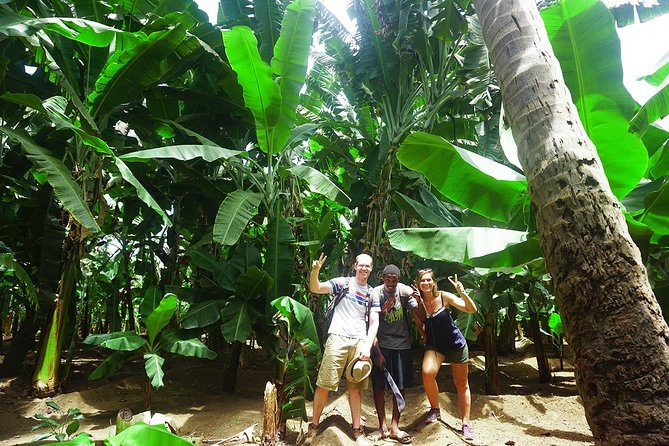
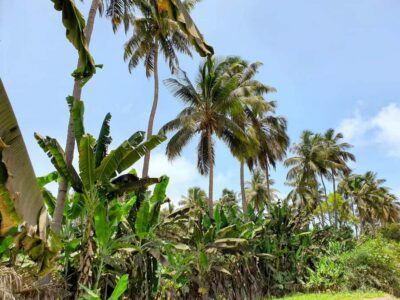
- The plantation walk is cool and easygoing: You walk through the country’s largest banana and coconut plantation, often with shade from the broad banana leaves.
- The cooking lesson is hands-on: At a local family home, you prepare cuscuz, a corn-flour cake, and fidjós, fried banana mixed with wheat.
- You get hotel pickup in Praia: The tour begins at 9:00 a.m. and includes the drive inland and return to your accommodation.
- The group is capped at eight people: This suits you if you prefer personal explanations over a large coach outing.
- Guides may include Ricardo, Katia, Ayrton, or Cleber: Katia has led Spanish-language tours, while Ayrton and Cleber have been praised for creating a warm cultural exchange.
- Bring sun protection and water: Comfortable clothes, a hat, water, and sunscreen are specifically recommended.
Why this four-hour Santiago outing works
This is a good choice when you want to see daily life beyond Praia. Santiago is Cape Verde’s largest island, and this experience points you toward two parts of island life that are easy to miss: farming and home cooking.
I like the balance. The first half takes you into working agricultural land. The second places you around a family kitchen. One shows how food grows. The other shows how it becomes part of ordinary life.
You will not spend hours in a museum or listen to a long lecture. Instead, the guide explains fruits and plants while you walk, then helps you prepare food with people who know the recipes firsthand. That makes the experience useful for anyone who wants context, not just photographs.
The price is $87.14 per person. That is not the cheapest way to fill four hours in Praia, but the cost includes round-trip hotel transfers, a guide, a plantation visit, and a two-hour food workshop. For you, the value depends on what you want from the day. If you would otherwise pay separately for transport into the interior and a cooking activity, the package is sensible. If you mainly want a quick look at farmland, it may feel costly.
More hands-on workshops:
- Best of Santiago Island: Cidade Velha, Workshop & Tarrafal Beach Tour
★ 4.5 · 3 reviews - From Praia: Banana Plantation Tour and Cuscuz Workshop
★ 4.8 · 75 reviews - Sal Island: Catxupa Cooking Class with a local family
★ 4.7 · 72 reviews
Leaving Praia for Santa Cruz
Pickup begins at your Praia hotel at 9:00 a.m. The drive inland toward Santa Cruz takes about 30 minutes, so you get a short transition from the capital to the agricultural center of Santiago.
That transfer matters. You do not need to arrange a taxi, negotiate a separate fare, or work out how to reach the plantation on your own. You can settle into the morning and watch the scenery change as the route moves between rocks and valleys.
The drive is part of the experience, but it is not presented as a sightseeing stop. Keep your expectations practical. You are being taken to the plantation and back, not on a full island road trip with repeated photo breaks.
Because the group has a maximum of eight people, pickup should feel more manageable than a large bus tour. The small size also helps once you reach the fields and the family home. You can hear the guide more easily and ask about the plants, recipes, and local customs.
Walking through Pedra Badejo’s banana plantation
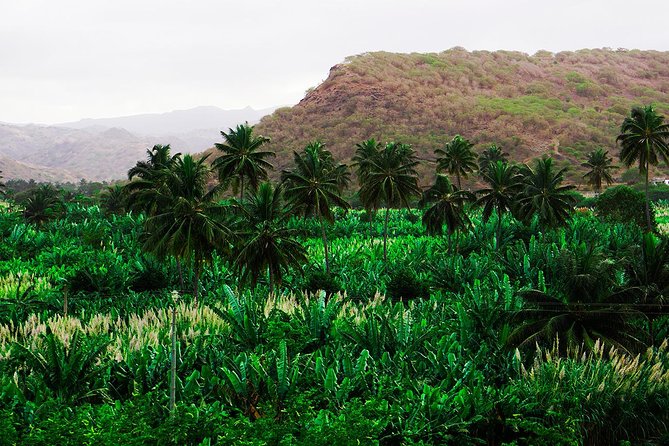
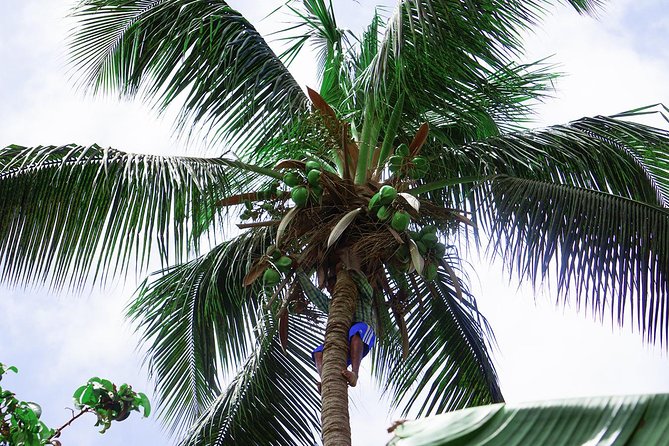
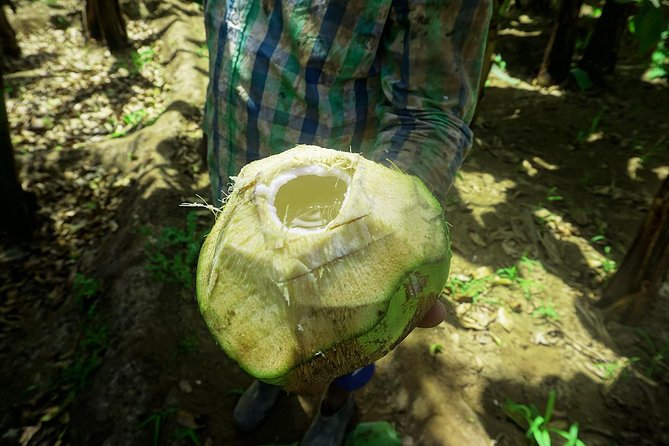
The first main stop is Pedra Badejo, home to the country’s largest banana and coconut plantation. You walk inside the agricultural fields while the local guide explains the fruits and plants growing along the route.
This is the most distinctive part of the outing for anyone interested in food. Bananas and coconuts are not just background scenery here. They connect directly with the cooking lesson later, especially when banana appears in the fidjós recipe.
The walk is described as a pleasant stroll with shade from the banana plants. That is useful in Santiago’s strong sun, though you should still wear a hat and sunscreen. Comfortable clothing and water are sensible choices, even for a short walk.
The guide’s role is important. Without explanation, a plantation can look like a pleasant green path and little else. With local context, you can notice different fruits and plants and understand how agriculture fits into island life. You may also learn which produce grows in the area and how it is used at home.
Fresh coconut water may be available for an extra charge. I would treat this as a welcome refreshment, not a guaranteed part of the tour. Bring water with you rather than counting on the coconut stop.
The plantation is a working agricultural setting, not a polished attraction built around displays. That is part of its appeal, but it also means the experience may feel simple. You are there to walk, listen, and look closely, not to expect elaborate facilities or a formal presentation.
From farm produce to Cape Verdean food
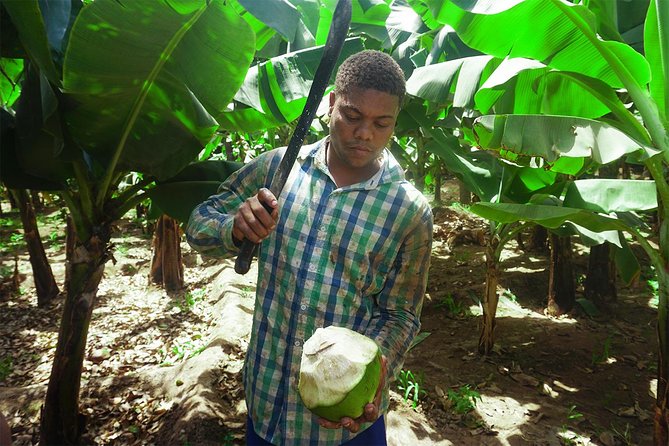
After about an hour in the fields, the group continues to São Lourenço dos Órgãos, also called Orgãos in the route description. Here, the focus changes from crops to cooking.
You visit the home of a local family and learn to prepare two traditional dishes from scratch. Cuscuz is a cake made from corn flour. Fidjós combines fried banana with wheat. These are modest ingredients, but that is exactly why the lesson has value. You get a clearer sense of how local food can grow from what is available nearby.
The two-hour kitchen visit is the heart of the experience. You are not simply handed a sample and sent on your way. You take part in preparation, which makes the food easier to remember and gives you something to discuss with the family and guide.
The setting also changes the tone. A family home offers a more personal look at Cape Verdean food traditions than a restaurant meal alone. You can ask questions as the dishes come together, and the guide can explain what you are seeing in a way that connects ingredients, cooking, and family life.
The visit is especially well suited to you if you enjoy food workshops, small groups, and direct contact with local people. It may be less appealing if you prefer a fast-moving schedule or do not want to participate in kitchen activities for two hours.
The family is identified as Mama Luisa’s home in the tour feedback. That detail gives the cooking stop a human focus. Guides and assistants have included Ayrton, Cleber, and local trainees, and Spanish-language groups may be led by Katia. Ricardo and the wider team have also helped adjust arrangements for visitors who had already taken part in related workshops.
You should not expect the same guide on every departure unless the operator confirms it. Still, these names show that the experience is built around a local team rather than a faceless transfer service.
A few more Praia trips worth weighing up
- Santiago: Landscapes, Street Art, and Markets Day Trip
★ 4.8 · 316 reviews - From Port of Praia: Island Tour for Cruise Ship passengers
★ 4.5 · 190 reviews - Praia & Cidade Velha: Guided City Tour
★ 4.8 · 80 reviews - Serra Malagueta: Principal Valley Hike & Lunch with Locals
★ 4.7 · 64 reviews
The people who shape the experience
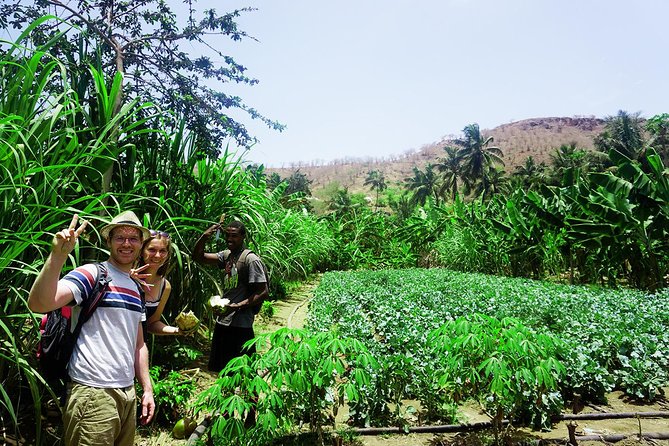
The strongest part of this tour is likely to be the human contact. The plantation is attractive, but the guide’s explanations give it meaning. The kitchen is welcoming, but the family and staff turn it into a cultural exchange.
Katia has led the experience in Spanish, which is useful if language affects how much you can take from a cooking lesson. Ayrton and Cleber have been connected with the visit to Mama Luisa’s home, and the team has been praised for making the session pleasant and informative.
The available rating is 5 out of 5 from 10 ratings, with 100 percent recommending the experience. That is a small sample, so I would not treat it as proof that every departure will be perfect. It does point to a clear pattern: the guides, the family visit, and the cultural side are the parts receiving the strongest praise.
One especially encouraging detail is the care shown when plans changed for a guest who had already completed the workshops. The company adjusted the trip to add more discovery, and the guest described the day as magical. That suggests some flexibility, though you should ask before booking if you need a custom plan.
What the route adds beyond the stops
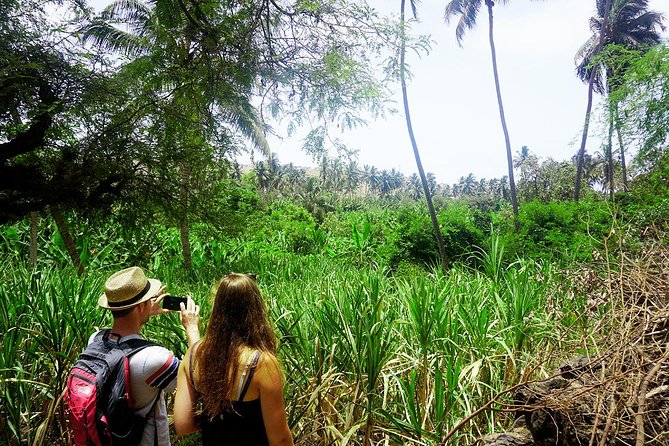
The return drive takes you between rocks and valleys on the way back to Praia. There is no separate admission charge for this section, and the tour concludes with drop-off at your accommodation.
This final drive helps tie the outing together. You have seen a productive part of Santiago, cooked food connected to local ingredients, and then returned through the island’s rougher scenery. It is not a dramatic sightseeing circuit, but it gives you a look at the contrast between Praia and the interior.
Do not book this expecting a full natural park hike. The provided schedule describes a plantation walk and a drive through the island’s rocky valleys, with the cultural workshop as the main extended activity. If your priority is serious hiking, you will need to check whether another excursion is a better fit.
Timing, group size, and comfort
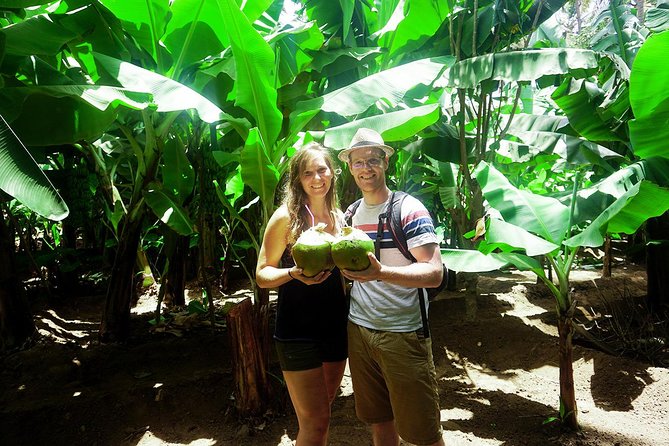
The advertised duration is about four hours. The schedule breaks down into roughly 30 minutes from Praia to Santa Cruz, one hour at the plantation, two hours with the family, and about 30 minutes back to Praia.
That leaves little spare time. Pickup delays, traffic, or a longer conversation at the family home could affect the exact return time. Avoid scheduling a tight activity immediately afterward.
The small group limit of eight is a real advantage. You are more likely to hear explanations in the fields, receive help during cooking, and speak with the family without competing with a crowd. Private-tour upgrades are available if you want a more personal schedule and do not mind paying more.
Most people can participate. The practical preparation is simple: wear comfortable clothes, bring a hat, carry water, and use sunscreen. The plantation walk is described as a pleasant stroll, but the tour still takes place outdoors and includes agricultural ground, so sensible shoes are wise.
Language and cultural connection
Language can make or break a food workshop. If you speak Spanish, Katia has led Spanish-language departures and received warm praise for being attentive and helpful.
The available information does not promise a particular language for every departure. If you need English, Spanish, or another language, confirm it when booking rather than assuming. That is especially important here because the experience depends on explanations and conversation, not just scenery.
The cultural value comes from the combination of places and people. You see where fruits grow, learn about local plants, and then use traditional ingredients in a household setting. That sequence gives you more than an isolated plantation stop or a stand-alone cooking class.
Is $87.14 a fair price?
I see the price as fair if you value convenience and local contact. The fee covers pickup and return to your Praia accommodation, transport inland, the guided plantation visit, and a two-hour family cooking session. You also avoid arranging separate transport to Pedra Badejo and São Lourenço dos Órgãos.
The value is weaker if you only want a short plantation walk. The agricultural stop lasts about an hour, and the rest of the time includes driving and the cooking workshop. You are paying for the full cultural experience, not just access to the fields.
Group discounts may be available, and a private version can be arranged for a more tailored outing. Since the standard group is already limited to eight, I would first consider the small-group option unless you have a special reason to need privacy.
You can cancel for a full refund up to 24 hours before the start time. Changes made less than 24 hours before departure are not accepted, and a minimum number of participants is required. Keep those rules in mind if your Praia schedule is uncertain.
Who should book this experience?
I would recommend it to you if you want a relaxed half-day outside Praia with a strong local focus. It suits food lovers, curious first-time visitors to Santiago, couples, families, and anyone who prefers a small group to a large coach.
It is also a good pick if you want an activity that does not demand a full day. The plantation walk is short, the cooking session is the main event, and hotel pickup keeps the morning simple.
You may want another tour if your main goal is extensive hiking, historic sights, beach time, or a broad island tour. This experience concentrates on agriculture, food, and family traditions. Its strength is focus.
Should you book it?
Book this tour if you want to understand Santiago through what people grow and eat. The banana plantation gives you an outdoor start, and the visit to Mama Luisa’s home brings the day into a personal setting.
I especially like the small group, the two-hour cooking lesson, and the chance to work with cuscuz and fidjós rather than merely taste them. Ask about the guide language before you reserve, bring sun protection and water, and leave room in your schedule for a relaxed return.
For an accessible introduction to Cape Verdean culture near Praia, this is a solid choice. For a packed sightseeing day, it is too narrow. The right decision comes down to whether you want more conversation and cooking, or more stops and scenery.
FAQ
What time does the tour start?
The tour starts at 9:00 a.m. with pickup at your hotel in Praia.
How long does the experience last?
The experience lasts approximately four hours, including the drive from Praia to the plantation area and the return to Praia.
Is hotel pickup included?
Yes. Round-trip transfers from your Praia hotel are included, with drop-off at your accommodation at the end.
How many people can join the group?
The activity has a maximum of eight participants. A private tour upgrade is also available.
What will I do at the banana plantation?
You will walk through the country’s largest banana and coconut plantation while a local guide explains the fruits and plants growing along the route. Fresh coconut water may be available at your own expense.
What food will I prepare?
At a local family home, you will prepare cuscuz, a traditional cake made from corn flour, and fidjós, fried banana mixed with wheat.
What should I bring?
Bring comfortable clothes, a hat, water, and sunscreen. You may cancel for a full refund up to 24 hours before the start time.
Just added around Praia
- Santiago Island: Private Airport Transfer to Praia or Vice Versa★ 5.0 · 3 reviews
- Cape Verde: Best Hikking Trails of Santiago Island – 6 Days★ 5.0 · 3 reviews
- Praia City Tours★ 3.4 · 3 reviews
- Hiking Águas Belas Cave★ 4.5 · 3 reviews
- Best of Santiago Island: Cidade Velha, Workshop & Tarrafal Beach Tour★ 4.5 · 3 reviews
- From Praia: Full-Day Guided Fogo Island Tour★ 4.2 · 3 reviews
- Tarrafal Bay Boat Trip and Beach Day★ 4.4 · 3 reviews
- Praia: Plateau and Cidade Velha Guided Tour★ 5.0 · 3 reviews