
Reviewed · HIKING & TREKKING
Santiago: Longueira, Pico de Antónia & Monte Tchota Trek
Santiago rewards strong legs with big views. This full-day trek links village life in Longueira, a local grogue distillery, Pico de Antónia, and the quiet natural park of Monte Tchota in one demanding outing. I like the mix of genuine local contact and mountain scenery, especially the chance to visit a rum maker and a primary school before walking into wilder country. I also like that guides such as Ricardo, Djibril, and Admilson Garcia have been praised for being friendly, attentive, and helpful on steep or slippery ground.
The main caution is simple: this is not a gentle country walk. The harder route covers about 9 kilometers, with roughly 1,050 meters of ascent, narrow tilted paths, and a maximum height near 1,390 meters. Even the shorter option is rated difficult, so you should bring proper hiking shoes, water, sun protection, and a fair amount of uphill stamina.
In This Review
- Key points before you book
- From Praia to Longueira’s village life
- The climb toward Pico de Antónia
- Views from the island’s highest walking point
- Monte Tchota and the wilder finish
- How difficult is the trek in real terms?
- What the $106 price delivers
- Small details that make the day better
- Who should book this Santiago trek?
- Should you book the Longueira, Pico de Antónia and Monte Tchota trek?
- FAQ
- Where does the trek begin and end?
- How long is the walking portion?
- How difficult is the hike?
- What is the highest point?
- What should I bring?
- What does the picnic include?
- What languages are available?
Key points before you book
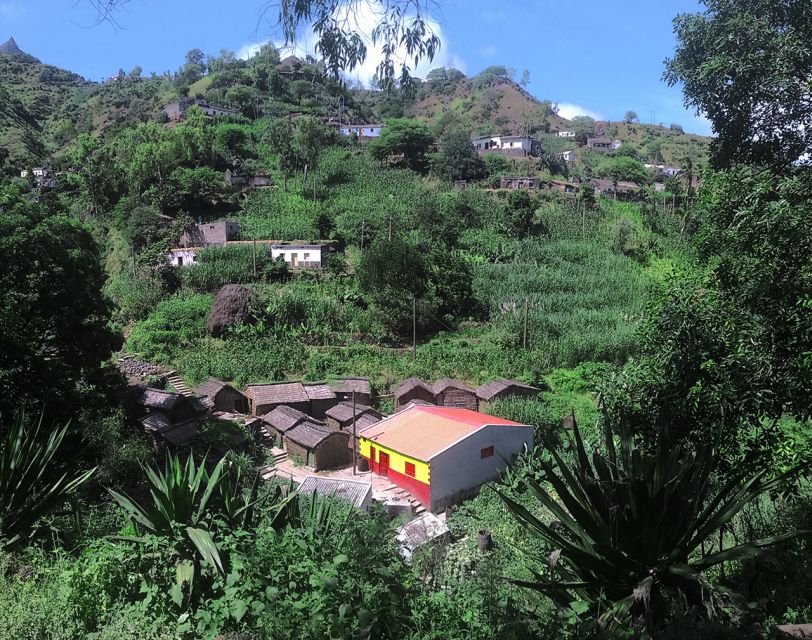
- Longueira adds real local contact: Visit a grogue distillery, Lemba Lemba Bar, and the village primary school rather than spending the whole day on a trail.
- Pico de Antónia is the physical test: The final section can become sharply steep, and the return may feel slower because the path can be very slippery.
- Two route options are available: The longer route is about 9 kilometers and six hours of walking, while the shorter option is about 6 kilometers and four hours.
- The views reach beyond Santiago: On a clear day, you might see Maio Island and Fogo Island’s volcano from the high point.
- Monte Tchota brings a quieter finish: Expect intact natural surroundings, endemic plants, animals, and some bird species at risk of extinction.
- The $106 price includes useful basics: Hotel pickup and return in Praia, transport, a guide, a small picnic, and liability insurance are included.
From Praia to Longueira’s village life
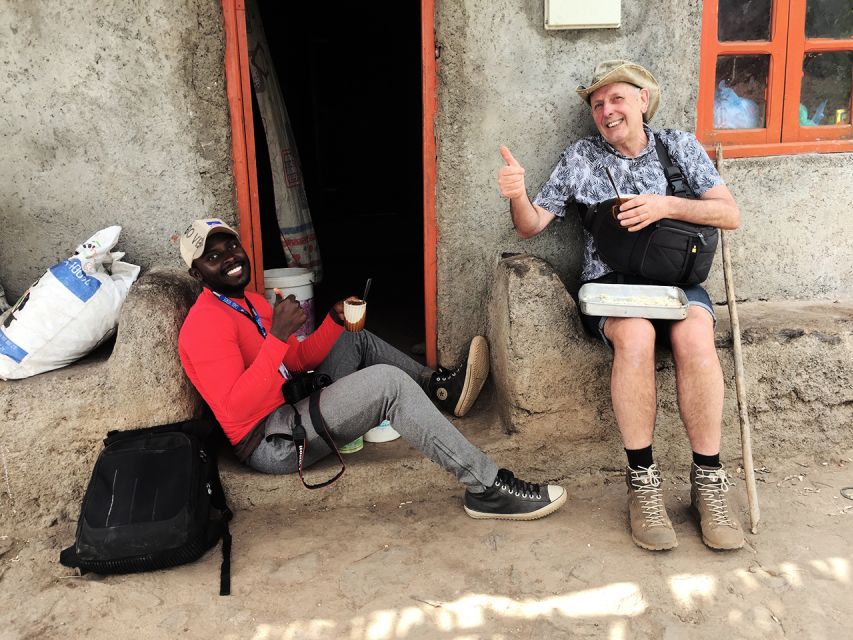
Your day begins with pickup at your accommodation in Praia. Transport is included, which matters here because the walk is one way and finishes away from its starting point. You are not left arranging a taxi at the end of a long mountain day.
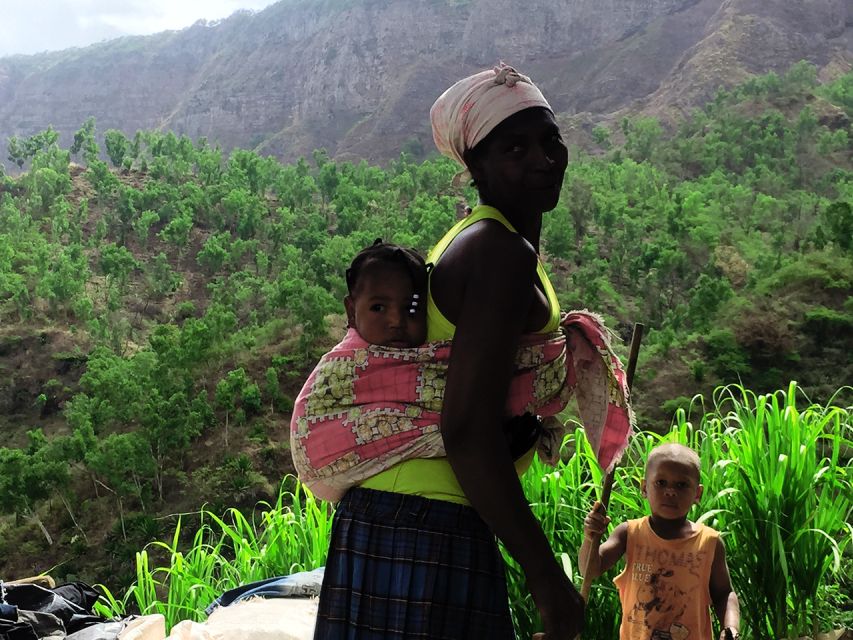
Longueira gives the excursion a human beginning. Before the climb, you can meet local residents and see a few ordinary places that explain daily life better than a polished sightseeing stop would. The visit includes a grogue distillery, the village primary school, and Lemba Lemba Bar.
Grogue is Cape Verde’s local sugarcane spirit. At the distillery, you get a look at a small-scale drink-making tradition and a chance to speak with people in the village. This stop is valuable because it puts the hike in context. You are not simply being driven to a mountain trail. You are seeing how rural communities fit into Santiago’s wider countryside.
The primary school may seem like a brief stop, but it gives the village visit a grounded feel. Lemba Lemba Bar adds another everyday meeting place. Do not expect a large attraction complex or a long formal presentation. The appeal is direct contact and a glimpse of local routines.
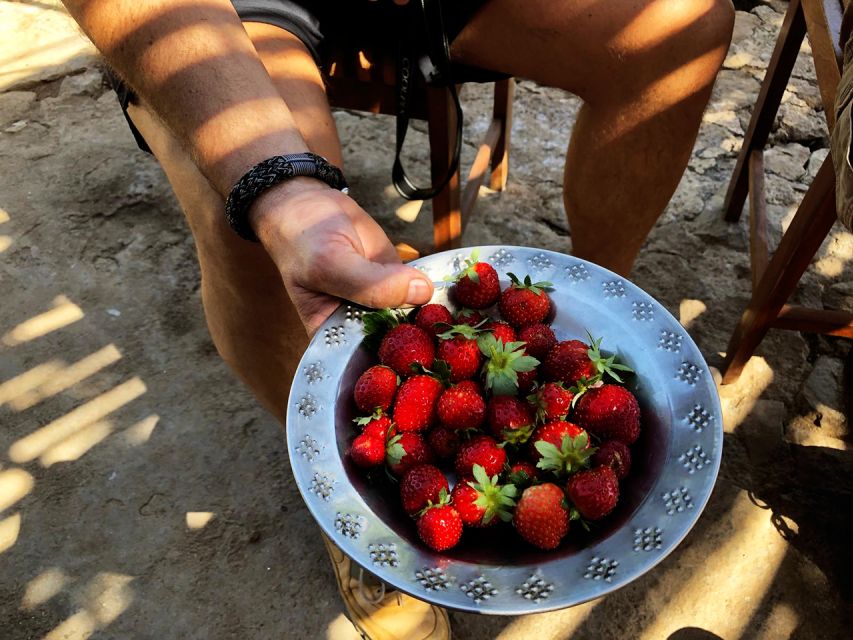
From December through May, the outing may also include a walk among strawberry fields and a picnic. That seasonal detail matters. You should not assume the strawberry-field portion is available all year, but during those months it adds a pleasant agricultural note before the harder walking begins.
More Hiking Tours in Santiago
- Serra Malagueta: Principal Valley Hike & Lunch with Locals
★ 4.7 · 64 reviews - Praia: Baobab Mysterious Tree, Green Valley & Old City Hike
★ 4.8 · 53 reviews - Santiago: Calabaceira Valley Trek & Visit to Cidade Velha
★ 4.8 · 49 reviews
The climb toward Pico de Antónia
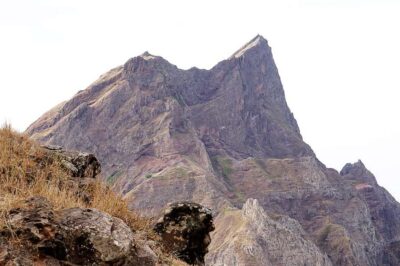
The mountain section is the heart of the day. Pico de Antónia is Santiago’s highest point, with the walking point reaching about 1,394 meters, or 4,573 feet. The route rises from around 485 meters, so the day asks your body to handle a serious gain in height.
The supplied route information gives two versions. Option 1 covers roughly 9 kilometers, takes about six hours of walking, and gains approximately 1,050 meters while losing around 600 meters. Option 2 is shorter at about 6 kilometers and four hours, with about 585 meters of ascent and 186 meters of descent. Both routes are one way, and both use narrow, tilted paths.
The description of five hours uphill should be taken seriously, even if your exact walking time follows the shorter route. The final meters can be especially steep. This is where a guide makes a practical difference. Djibril has been praised for being professional, cheerful, attentive, and respectful, while Ricardo has been described as kind and friendly. Admilson Garcia is also noted for knowing the area well and pointing out good photo spots.
Those details are worth considering because the trail is not just a matter of following a broad marked road. A guide can help you place your feet, judge the pace, and stay focused when the incline gets tiring. Walking sticks may be provided, and one of the strongest practical tips is to use them. The downhill portion can be harder than expected when the surface turns slick.
Bring hiking shoes, not casual sneakers. The path is narrow and tilted, and the outing is rated very difficult for the longer version. Hiking pants are especially advised from August through November, when trail conditions may make more coverage useful. A hat, sunscreen, and plenty of water belong in your day pack.
Views from the island’s highest walking point
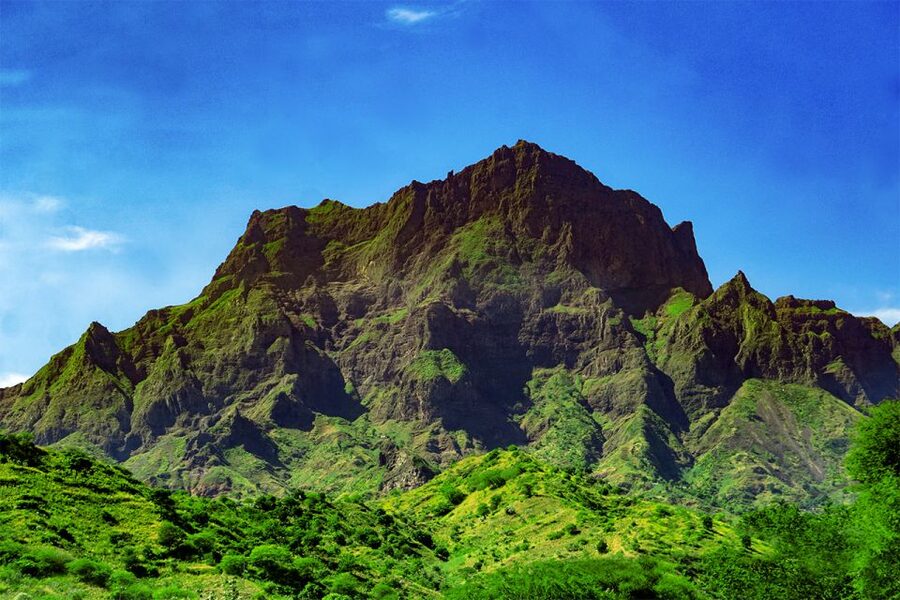
The reward for the climb is a broad view over the São Jorge Valley. The exact visibility depends on conditions, but you may also see Maio Island and the volcano on Fogo Island. These are the photographs that give the day its sense of scale: you are high on Santiago, looking across open island country toward other Cape Verdean islands.
I would plan to stop for photographs without rushing. The route includes several places where guides can help you find good angles, and a small picnic is included with a sandwich, fruit, and soft juice. It is a modest meal rather than a feast, but it is well timed for a demanding walk.
The mountain views are not the only point of interest. Along the route, look for endemic plants and animals, plus bird species that are in danger of extinction. The natural value is easy to miss if you treat the walk as a race to the summit. Slow down when the guide points out something unusual.
You should also accept that clouds or haze may limit distant views. The possibility of seeing Maio and Fogo is a bonus, not a promise. Even without the full island-to-island view, the São Jorge Valley and the changing vegetation provide plenty to notice.
Monte Tchota and the wilder finish
The trek ends in Monte Tchota, also written as Monte Txota, a natural park known here for intact nature and a range of plant and animal life. This closing section changes the mood of the outing. After the village and the strenuous ascent, you reach a quieter area where the focus shifts from people and viewpoints to habitat.
For anyone interested in nature, this is a strong part of the route. Endemic species matter because they are tied to Cape Verde rather than being common sights you could find anywhere. The mention of threatened bird species also gives the walk more purpose than simply collecting a summit photograph.
The park finish does not mean the day becomes effortless. The route is still one way, and the total distance and descent depend on which option is used. The path can be slippery on the return, so do not save all your energy for the climb and assume the downhill will be easy. Several accounts of the outing place special emphasis on the guide’s help during the descent.
Once the trek is complete, transport returns you to your hotel in Praia. That door-to-door arrangement is one of the tour’s practical strengths. After six hours of walking, the last thing you want is uncertainty about getting back.
More walks:
- Santiago: Monte Tchota Natural Park to Pico d’Antónia Hike
★ 4.8 · 43 reviews - Serra Malagueta Natural Park Hike & Relaxing Swim at Tarrafal Beach
★ 5.0 · 30 reviews - Serra Malagueta Natural Park: Hike to Gongon Valley & Lunch
★ 4.8 · 22 reviews - Santiago Island: 4-Hour Calabaceira Valley Hike & Guided Tour to Cidade Velha
★ 5.0 · 18 reviews
How difficult is the trek in real terms?
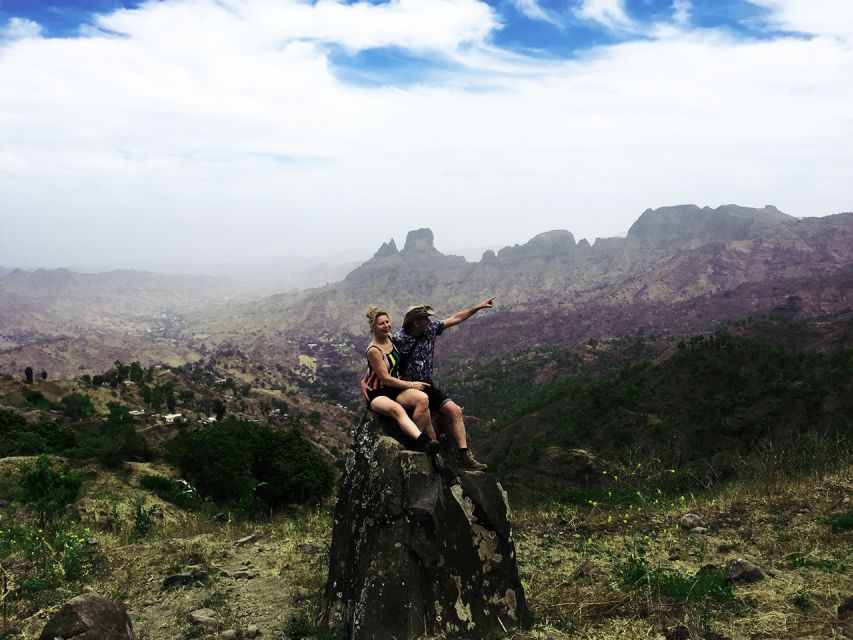
The official grading is very difficult for Option 1 and difficult for Option 2. Those labels are more useful here than a vague promise of a scenic hike. You need to be comfortable with sustained uphill walking, uneven footing, and a narrow trail.
I would choose the longer route only if you already hike regularly and handle steep climbs well. The shorter option reduces the distance and height gain, but it remains a serious walk. The data lists a maximum elevation of about 1,160 meters for Option 2, compared with around 1,390 meters for Option 1.
The descent deserves equal attention. One account describes the return as longer than the climb because it was very slippery. That is exactly why walking poles, sturdy shoes, and careful pacing matter. A guide can offer support and advice, but the guide cannot remove the physical demands of the trail.
This excursion suits active adults and experienced hikers who want more than a city visit or an easy viewpoint. It is not a good match if you dislike steep ground, narrow paths, or long hours on your feet. The price does not turn a difficult trek into an easy one.
What the $106 price delivers
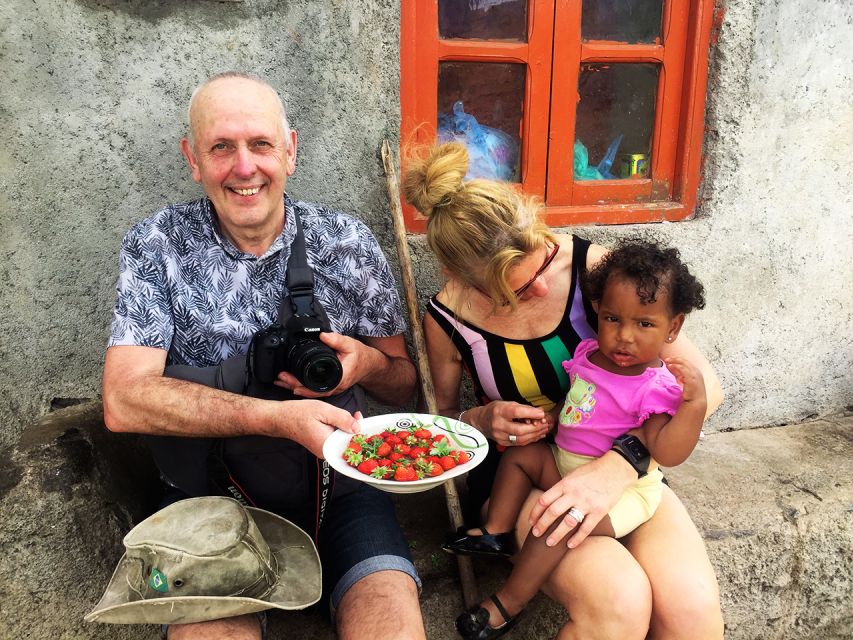
At $106 per person, the value depends on how you use the included services. The price covers pickup and drop-off at your Praia accommodation, transport, a guide, the picnic, and liability insurance. Those inclusions remove several costs that could otherwise add up, especially transport for a one-way route and a private mountain guide.
The local element also adds value. You are not paying only for a transfer to a summit. The day includes Longueira, the grogue distillery, the school, the bar, rural fields during the right season, and Monte Tchota’s natural setting. That combination gives you a fuller picture of Santiago.
The main limitation is the shared-group minimum. The group trek requires at least two participants. If that number is not reached, the provider may offer another date, charge an extra fee to operate privately, or cancel with a full refund. It is worth knowing this before you build a tightly packed holiday schedule.
The tour is offered in English, Spanish, French, and Portuguese. That range can make the experience easier to follow, especially during the village visit and nature stops.
Small details that make the day better
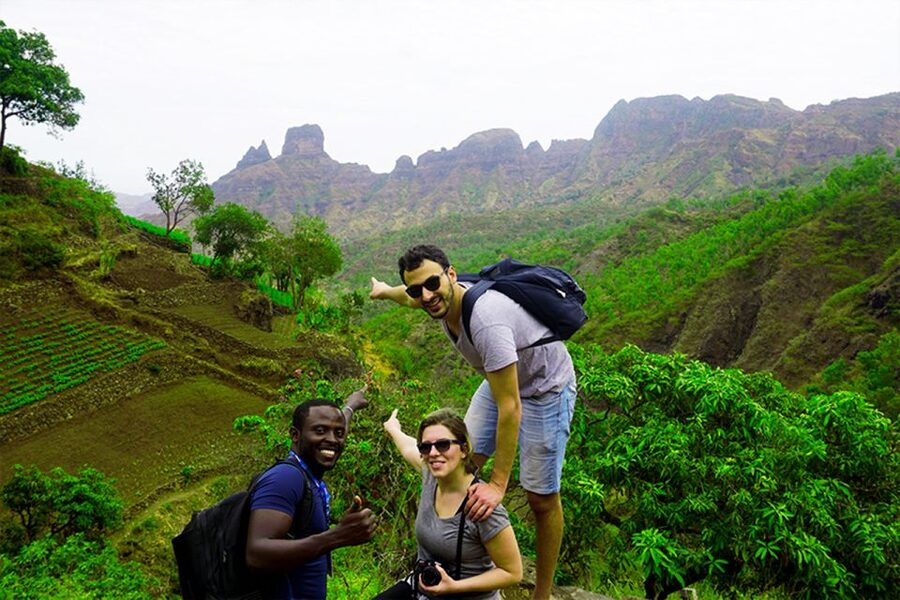
Start with the basics. Wear hiking shoes with a secure grip, carry water, and use sunscreen even if the morning begins cool. A hat helps on exposed sections, and hiking pants are recommended from August through November.
Walking sticks are strongly advised. They may be supplied, but I would still confirm this when booking if poles are important to you. They help on both the ascent and the slippery descent.
Keep your expectations realistic about food. The included picnic is a sandwich, fruit, and soft juice. It is useful fuel, but you should not treat it as a full meal for an all-day exertion. The tour information specifically tells you to bring water, so do not rely on the soft drink alone.
The cancellation terms are flexible: you can cancel up to 24 hours ahead for a full refund, and you can reserve while paying later. Those policies are helpful if your plans in Praia are still changing, but the bigger decision is your fitness and footwear.
Who should book this Santiago trek?
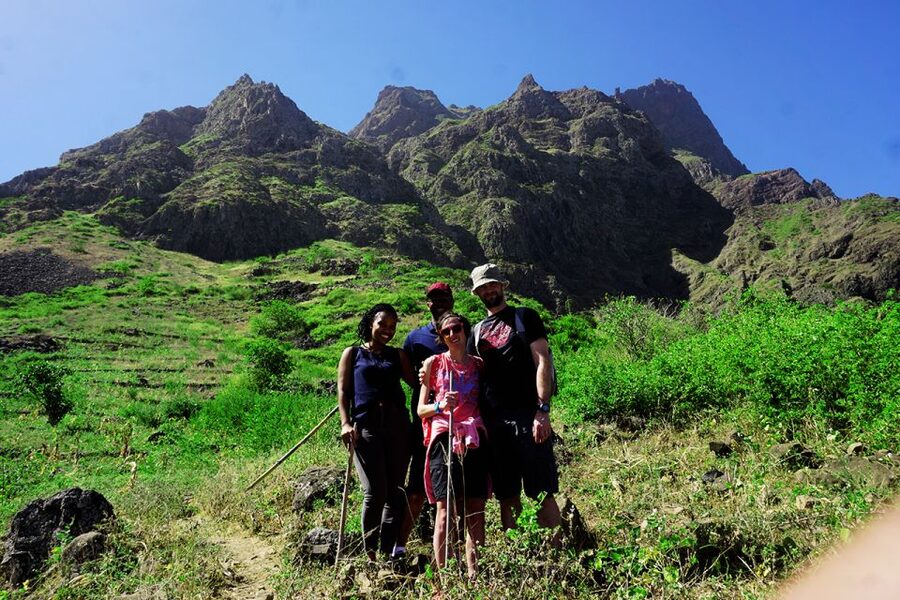
I would recommend it to you if you want a demanding mountain day with local contact built in. The village stops keep the experience from feeling like a simple climb, while the summit and Monte Tchota provide the scenery and nature interest.
It is particularly suitable for experienced hikers, active visitors, and anyone keen to see Santiago beyond Praia. The chance to photograph Fogo’s volcano and Maio Island adds a special reward on a clear day, while the endemic species and threatened birds give nature-minded walkers something to watch for.
I would skip it if you want a relaxed excursion, have no proper hiking shoes, or feel uneasy on slippery and narrow paths. The shorter route may help, but it is still rated difficult. Ask about the available route before departure so you know whether the day will involve the higher summit point or the reduced option.
Should you book the Longueira, Pico de Antónia and Monte Tchota trek?
Book this tour if you want Santiago’s countryside in one serious day: a village, local grogue, mountain views, a high summit, and a natural park. The $106 cost is reasonable for the transport, guide, picnic, insurance, and return to Praia, especially on a one-way trail.
My advice is to treat the hike as the main event, not a side activity. Wear proper shoes, bring water and sun protection, use walking sticks, and leave room in your schedule for a slow descent. If your legs and footwear are ready, this is one of the more rewarding ways to see Santiago’s high country.
FAQ
Where does the trek begin and end?
The tour begins with pickup at your accommodation in Praia. The trek finishes in Monte Tchota or Monte Txota, followed by transport back to your hotel in Praia.
How long is the walking portion?
There are two route options. Option 1 covers about 9 kilometers and takes roughly six hours of walking. Option 2 covers about 6 kilometers and takes about four hours.
How difficult is the hike?
Option 1 is rated very difficult, while Option 2 is rated difficult. The paths are narrow and tilted, with substantial uphill sections and a potentially slippery descent.
What is the highest point?
The longer route reaches about 1,390 meters, or 1,394 meters at the Pico de Antónia walking point. The shorter route reaches about 1,160 meters.
What should I bring?
Bring a hat, hiking shoes, sunscreen, and water. Hiking pants are strongly advised from August through November, and walking sticks are recommended.
What does the picnic include?
The picnic includes a sandwich, fruit, and soft juice.
What languages are available?
The tour is offered in English, Spanish, French, and Portuguese.
Just added around Praia
- Santiago Island: Private Airport Transfer to Praia or Vice Versa★ 5.0 · 3 reviews
- Cape Verde: Best Hikking Trails of Santiago Island – 6 Days★ 5.0 · 3 reviews
- Praia City Tours★ 3.4 · 3 reviews
- Hiking Águas Belas Cave★ 4.5 · 3 reviews
- Best of Santiago Island: Cidade Velha, Workshop & Tarrafal Beach Tour★ 4.5 · 3 reviews
- From Praia: Full-Day Guided Fogo Island Tour★ 4.2 · 3 reviews
- Tarrafal Bay Boat Trip and Beach Day★ 4.4 · 3 reviews
- Praia: Plateau and Cidade Velha Guided Tour★ 5.0 · 3 reviews
Hiking & Trekking, compared.
Serra Malagueta: Principal Valley Hike & Lunch with Locals
Read our review →
Baobab Mysterious Tree, Green Valley & Old City Hike
Read our review →
Monte Tchota Natural Park to Pico d’Antónia Hike
Read our review →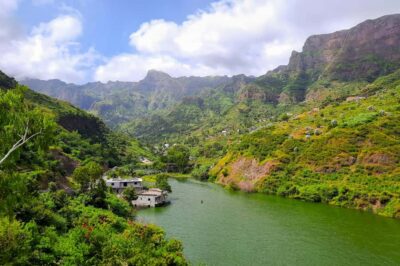
Browse the lists this tour appears in